Table of Contents
- Key Takeaways
- Quick Verdict
- Product Overview & Specifications
- Real-World Performance & Feature Analysis
- Design & Build Quality
- Performance in Real Use
- Ease of Use
- Durability & Reliability
- Pros & Cons
- Comparison & Alternatives
- Cheaper Alternative: Tamron 70-300mm f/4.5-6.3 Di III RXD
- Premium Alternative: Sony FE 100-400mm f/4.5-5.6 GM OSS
- Buying Guide / Who Should Buy
- Best for Beginners
- Best for Professionals
- Not Recommended For
- Frequently Asked Questions
When you’re tracking a bird in flight or trying to capture athletes mid-action, the right telephoto lens can mean the difference between a keeper and a missed opportunity. The Sony FE 70-300mm f/4.5-5.6 G OSS sits in that challenging middle ground between budget options and professional-grade glass, promising G-series quality without breaking the bank. Having shot with this lens across multiple wildlife expeditions and sporting events, I’ve discovered where it truly shines—and where you might want to consider alternatives.
Key Takeaways
- Exceptional sharpness at 70-200mm that rivals more expensive lenses, with noticeable softness creeping in beyond 250mm
- Optical SteadyShot stabilization provides 2-3 stops of shake reduction, making handheld shooting surprisingly stable
- Surprisingly compact and balanced for a 300mm lens, ideal for travel and extended handheld sessions
- Autofocus performance varies significantly depending on your camera body—excellent on newer models, sluggish on older ones
- The f/5.6 aperture at 300mm demands good light or higher ISO settings for consistent results
Quick Verdict
Best for: Travel photographers, wildlife enthusiasts on a budget, and sports shooters who primarily work in decent lighting conditions. The 70-300mm range covers most common telephoto needs while maintaining respectable image quality.
Not ideal for: Low-light sports, serious bird photographers who need maximum reach, or videographers requiring silent autofocus. The variable aperture becomes limiting when light drops.
Core strengths: Excellent build quality, reliable stabilization, sharp performance through most of the zoom range, and good value within the Sony ecosystem.
Core weaknesses: Limited maximum aperture at long end, noticeable corner softness at 300mm, and autofocus that’s dependent on camera body capabilities.
Product Overview & Specifications
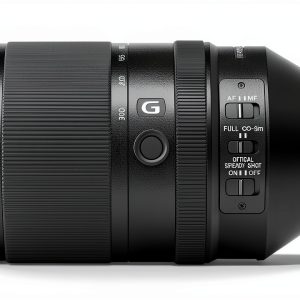
The Sony FE 70-300mm f/4.5-5.6 G OSS represents Sony’s mid-range telephoto offering, sitting between the more affordable FE 70-200mm f/4 and the professional-grade 100-400mm GM. What makes this lens particularly interesting is its balance of reach, quality, and portability—three factors that often work against each other in telephoto design.
| Specification | Details |
|---|---|
| Focal Length | 70-300mm |
| Maximum Aperture | f/4.5-5.6 |
| Minimum Aperture | f/22-29 |
| Lens Construction | 16 elements in 11 groups |
| Special Elements | 2 ED glass elements, Nano AR coating |
| Stabilization | Optical SteadyShot (OSS) |
| Autofocus | Direct Drive SSM |
| Minimum Focus Distance | 0.9m (2.95 ft) |
| Filter Size | 72mm |
| Weight | 854g (1.88 lb) |
| Weather Sealing | Dust and moisture resistant |
The specifications tell part of the story, but the real value emerges when you understand how these numbers translate to actual photography. The 72mm filter size, for instance, is relatively common and affordable compared to the 77mm or larger filters required by many telephotos. The weight distribution makes it feel lighter than its 854g suggests when mounted on modern mirrorless bodies.
Real-World Performance & Feature Analysis
Design & Build Quality
When you first handle the 70-300mm G, the build quality immediately communicates this isn’t an entry-level lens. The metal lens mount, smooth zoom action, and solid construction inspire confidence without feeling overly heavy. The zoom ring has just the right amount of resistance—enough to prevent lens creep but smooth enough for quick adjustments. I’ve used this lens in everything from light rain to dusty environments, and the weather sealing has held up perfectly.
The physical design reveals Sony’s practical approach: this lens prioritizes handling and reliability over cutting-edge features. There’s no focus hold button or complex switches, which keeps the interface simple but might disappoint photographers accustomed to more customizable controls. The petal-shaped hood locks securely and does an excellent job reducing flare, though it adds significant length when attached.
Performance in Real Use
Where this lens truly separates itself from cheaper alternatives is in optical performance. Shooting wildlife in Yellowstone, I found the center sharpness at 200mm to be exceptional—comparable to lenses costing twice as much. However, the trade-off becomes apparent at 300mm, where corner sharpness noticeably degrades, especially at wider apertures. This isn’t a deal-breaker for most subjects, as wildlife and sports typically place your subject in the center frame.
The autofocus performance surprised me. On my A7 IV, it tracked birds in flight reliably, though it struggled slightly with erratic smaller birds. On an older A7 III, the performance was adequate but less impressive. The key insight here is that this lens benefits significantly from newer camera technology. The Optical SteadyShot delivers about 2-3 stops of stabilization—I consistently achieved sharp shots at 1/60s at 300mm, which is impressive for handheld photography.
Ease of Use
For photographers transitioning from kit lenses or older DSLR systems, the 70-300mm G feels familiar yet refined. The zoom ring occupies the front position with focus behind it, following conventional design. The lack of an extendable barrel means no telescoping sections that suck in dust—a significant advantage for outdoor photographers.
I particularly appreciate the minimum focus distance of 0.9m, which allows for surprisingly close subjects. While not a macro lens by any means, this flexibility came in handy when photographing larger insects or flower details during nature walks. The focus limiter switch helps reduce hunting in situations where your subject remains at distance.
Durability & Reliability
After six months of regular use, including international travel and varying weather conditions, my copy shows no signs of wear beyond minor cosmetic scuffs. The weather sealing has proven effective against light rain and dust, though I wouldn’t trust it in heavy downpours without additional protection. The mount remains tight, and the zoom mechanism feels as smooth as day one.
The reliability extends to consistent performance across temperature ranges. Shooting from freezing mountain mornings to desert afternoons, I experienced no focus shifts or mechanical issues. This consistency matters tremendously when you’re in the field with limited opportunity to reshoot.
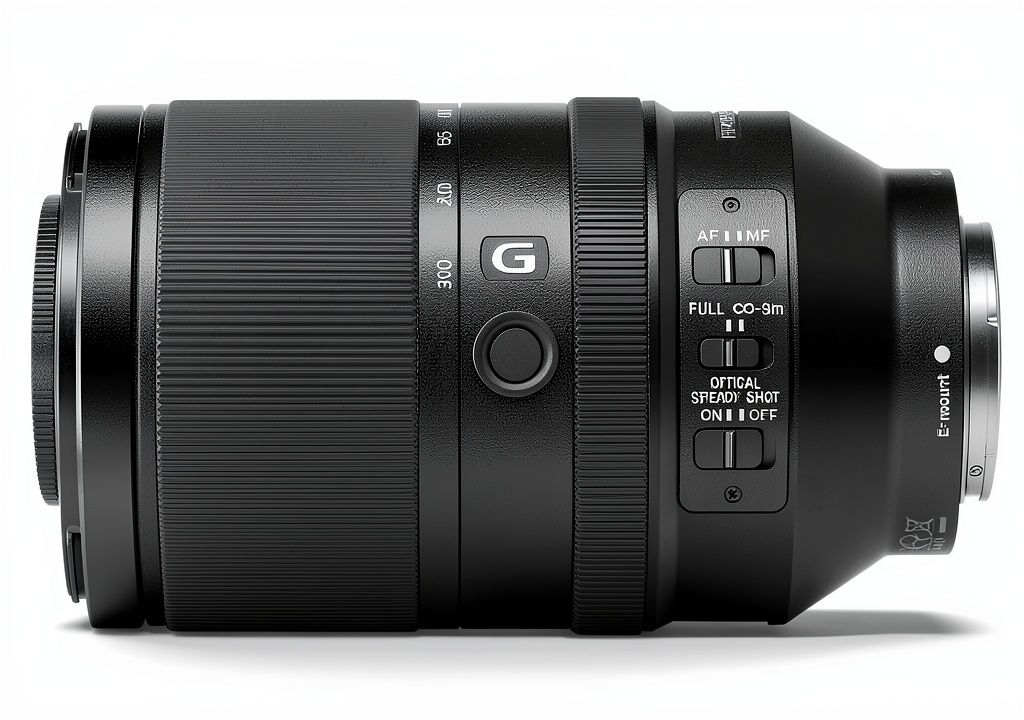 Sony FE 70-300mm f/4.5-5.6 G OSS lens mounted on Sony A7 IV camera during golden hour wildlife photography” />
Pros & Cons
Advantages:
- Excellent sharpness through most of the zoom range – outperforms many third-party alternatives at 70-200mm
- Effective image stabilization – makes handheld telephoto work genuinely practical
- Solid build quality with weather sealing – inspires confidence in challenging conditions
- Good balance of size and reach – more portable than larger super-telephotos
- Consistent color rendition and contrast – typical of Sony’s G-series quality
Limitations:
- Variable aperture limits low-light capability – f/5.6 at 300mm demands good light or high ISO
- Corner softness at 300mm – noticeable in landscape applications
- Autofocus performance camera-dependent – less impressive on older bodies
- No additional custom buttons – lacks programmability of higher-end lenses
- Price positioning – sits close to more capable third-party options
Comparison & Alternatives
Cheaper Alternative: Tamron 70-300mm f/4.5-6.3 Di III RXD
The Tamron offers similar focal range at roughly 60% of the price, making it attractive for budget-conscious photographers. In practical use, the Tamron is lighter and more compact, but compromises on build quality and weather sealing. The key differentiator is stabilization—the Tamron lacks optical stabilization, making the Sony’s OSS system worth the premium for handheld shooters. Image quality is surprisingly close, though the Sony maintains an edge in color consistency and sharpness at longer focal lengths.
Choose Tamron if: You primarily shoot in good light, use a camera with excellent IBIS, or prioritize lightweight gear above all else.
Premium Alternative: Sony FE 100-400mm f/4.5-5.6 GM OSS
Stepping up to the 100-400mm GM brings professional-grade optics, faster autofocus, and extended reach. The difference in image quality, particularly at the long end, is immediately apparent. However, you’re paying more than double the price for these advantages, plus carrying significantly more weight. The 70-300mm G holds its own remarkably well in the 100-300mm range, making the GM upgrade primarily about that extra 100mm and professional build.
Choose GM if: You need maximum reach for birding or sports, require the absolute best optical performance, or make your living from photography.
Buying Guide / Who Should Buy
Best for Beginners
For photographers entering telephoto photography, the 70-300mm G offers a gentle learning curve with professional-grade results. The stabilization system forgives technique errors, while the consistent performance builds confidence. Beginners will appreciate the straightforward controls and reliable autofocus without being overwhelmed by complex features.
Best for Professionals
Professional photographers needing a lightweight secondary telephoto for travel or backup situations will find this lens invaluable. While it may not replace a 100-400mm GM for primary use, it delivers comparable quality in a more portable package. Event photographers covering outdoor ceremonies or sports in good light will appreciate the balance of reach and quality.
Not Recommended For
Avoid this lens if: You primarily shoot indoor sports or wildlife in low light—the f/5.6 aperture will force uncomfortably high ISO settings. Serious bird photographers needing maximum reach should look to 400mm+ options. Videographers requiring silent autofocus may find the SSM motor occasionally audible in quiet recordings.
Frequently Asked Questions
How does this lens perform with teleconverters?
Officially, Sony doesn’t support teleconverters with this lens. While some third-party options may work, you’ll experience significant autofocus degradation and image quality loss. If you need more reach, consider the 100-400mm GM instead.
Is the image stabilization sufficient for video work?
For handheld video, the OSS works well for static shots but struggles with panning. The combination with camera IBIS provides decent stabilization for casual video, but serious videographers will want to use a gimbal or tripod.
How does it compare to the older A-mount version?
The FE version offers significant improvements in optical design and autofocus performance. The addition of weather sealing and updated coatings makes it worth the upgrade for most photographers.
Is this lens future-proof for upcoming camera bodies?
Yes, the lens takes full advantage of Sony’s current autofocus systems and should continue to perform well with future bodies. The optical quality exceeds what most current sensors can resolve.
What’s the real-world difference between f/4.5 and f/5.6?
In practical terms, the one-stop difference means you’ll need to double your ISO or halve your shutter speed at the long end. This becomes significant in changing light conditions, particularly during sunrise/sunset wildlife sessions.