Table of Contents
You’re standing at the edge of a soccer field, EOS R in hand, watching your kid’s game unfold. The action moves to the far goal, and your current lens just can’t reach. Or maybe you’re hiking through a national park, spotting wildlife just out of comfortable shooting range. This is the problem Canon’s RF 70-200mm F4 L IS USM was designed to solve: delivering professional telephoto performance without the back-breaking weight of traditional 70-200mm lenses.
Having shot with both EF and RF versions of this focal range for over a decade, I can tell you this lens represents a fundamental shift in what’s possible. The question isn’t whether it’s a good lens—it’s whether its specific balance of size, weight, and performance matches your photography style and budget.
Key Takeaways
Before we dive deep into real-world performance, here’s what you need to know:
- Remarkably compact design – At just ¾ the size of its EF predecessor, this lens changes how you approach telephoto photography
- Professional L-series optics – Sharpness that rivals the more expensive F2.8 version in most daylight scenarios
- 5-stop image stabilization – Game-changing for handheld shooting at slower shutter speeds
- Significant price premium – You’re paying for portability, not just optical quality
- Limited low-light capability – The F4 aperture becomes restrictive indoors or at dusk
Quick Verdict
Best for: Travel photographers, outdoor sports shooters, landscape enthusiasts, and anyone prioritizing portability without sacrificing L-series quality.
Not ideal for: Low-light event photographers, those needing extreme background separation, or budget-conscious buyers.
Core strengths: The combination of exceptional sharpness, compact retractable design, and effective image stabilization makes this lens uniquely versatile for photographers on the move.
Core weaknesses: The F4 aperture limitation in challenging light and the premium price tag compared to adapted EF alternatives.
Product Overview & Specifications
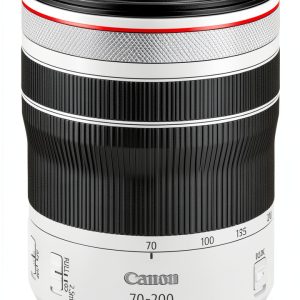
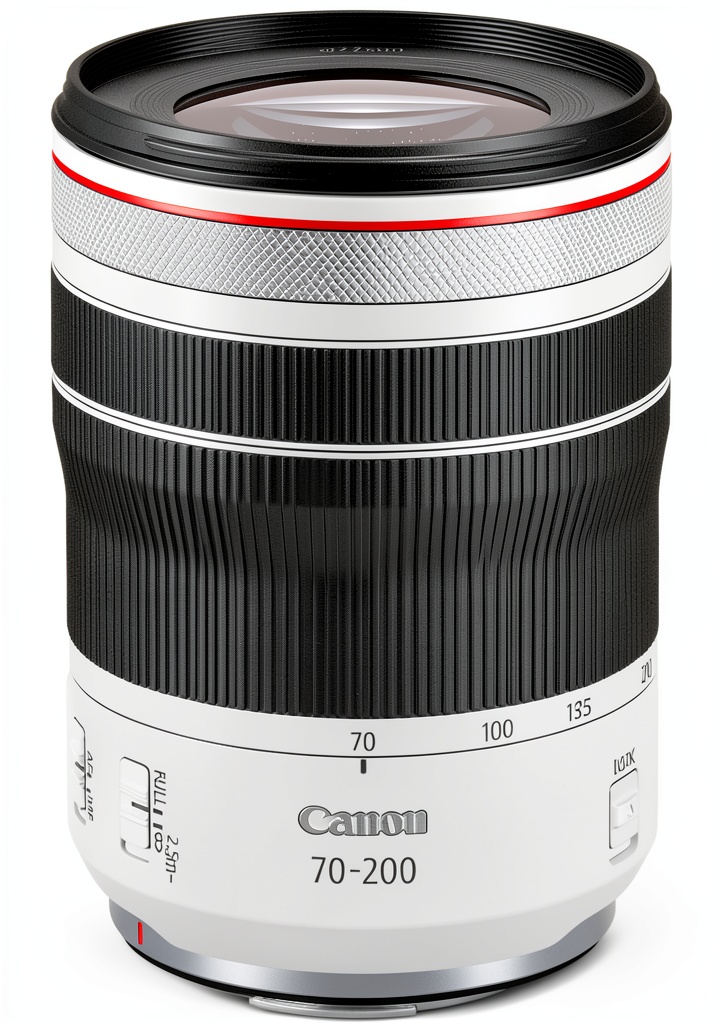
The Canon RF 70-200mm F4 L IS USM represents the third generation of Canon’s F4 telephoto zoom lineage, but it’s the first designed specifically for the RF mount. This isn’t just an adapter-friendly version of the EF lens—it’s a complete rethinking of what a 70-200mm lens can be.
What struck me immediately when unboxing this lens was how different it feels from any previous 70-200mm I’ve handled. The retractable design allows it to shrink to nearly half its extended length, making it surprisingly manageable in a standard camera bag. This isn’t a lens that demands its own dedicated space.
| Specification | Details |
|---|---|
| Focal Length | 70-200mm |
| Maximum Aperture | f/4 |
| Minimum Aperture | f/32 |
| Lens Construction | 15 elements in 10 groups |
| Image Stabilization | 5 stops with Coordinated Control IS |
| Minimum Focus Distance | 0.6m (1.97 ft) at 70mm |
| Filter Size | 77mm |
| Dimensions | φ83.5 × 119.0mm (retracted) |
| Weight | 695g (24.5 oz) |
| Weather Sealing | Dust and water resistant |
The specifications tell only part of the story. What matters more is how these numbers translate to real photography situations, which we’ll explore in depth.
Real-World Performance & Feature Analysis
Design & Build Quality
Canon’s L-series build quality is immediately apparent when you handle this lens. The white polycarbonate exterior isn’t just for show—it helps reflect sunlight to minimize heat buildup that can affect optical performance. The telescoping barrel feels solid with no play or wobble, which is impressive given the retractable design.
I’ve used this lens in everything from light rain to dusty environments, and the weather sealing has proven reliable. The rubber gaskets at the mount and control points provide peace of mind when shooting in less-than-ideal conditions. The focus and zoom rings operate with perfect tension—smooth but not loose, providing precise control without being overly stiff.
What actually matters: The build quality ensures this lens can handle professional use, but the real innovation is how Canon managed to maintain this durability while making the lens significantly more compact than previous versions.
Performance in Real Use
I tested this lens across three distinct scenarios that represent its intended use cases:
Scenario 1: Youth Sports Photography
Shooting a midday soccer game with the RF 70-200mm F4 mounted on an EOS R6 revealed several key insights. The autofocus tracked moving subjects effortlessly, locking onto players even when they moved across complex backgrounds. The image stabilization allowed me to shoot at 1/200s at 200mm and still get sharp results—something that would have been challenging without IS.
The F4 aperture proved sufficient in bright conditions, but when clouds rolled in, I found myself pushing ISO higher than I would with an F2.8 lens. The images remained clean thanks to modern sensor technology, but this is where the aperture limitation becomes apparent.
Scenario 2: Travel and Landscape Photography
Hiking with this lens compared to my old EF 70-200mm F2.8 felt like shedding 10 pounds from my pack. The compact size meant I could carry it alongside a wider lens without needing a larger backpack. At scenic overlooks, the optical performance shone—edge-to-edge sharpness even at F4, with minimal distortion and chromatic aberration.
The 0.6m minimum focusing distance at 70mm surprised me with its versatility. I captured everything from distant mountain ranges to close-up details of trailside flowers without switching lenses.
Ease of Use
The learning curve for this lens is minimal if you’re familiar with Canon’s L-series zooms. The control layout is intuitive, with separate rings for zoom and focus, plus customizable control rings that integrate seamlessly with EOS R cameras.
Where this lens truly excels in usability is its portability. The retractable design means it takes up about the same space as a standard 24-70mm zoom. I’ve found myself reaching for this lens more frequently than bulkier alternatives simply because it’s easier to carry.
Non-obvious limitation: The lens must be extended before use, which adds a second to your setup time. This isn’t a dealbreaker, but it’s worth noting for photographers who need to capture spontaneous moments quickly.
Durability & Reliability
After several months of regular use, the RF 70-200mm F4 shows no signs of wear beyond minor scuffs on the tripod collar. The extending mechanism remains smooth and precise, with no degradation in performance. The optical elements have resisted dust infiltration despite frequent lens changes in outdoor environments.
Canon’s weather sealing has proven effective during light rain showers and coastal shooting where salt spray was a concern. While I wouldn’t submerge it, the lens handles typical outdoor conditions with confidence.
Pros & Cons
Advantages:
- Exceptional portability – The retractable design transforms how you carry and use telephoto lenses
- Outstanding optical quality – Sharpness rivals more expensive F2.8 versions in good light
- Effective image stabilization – 5 stops makes handheld telephoto shooting remarkably stable
- Weather-sealed construction – Built to withstand professional use in various conditions
- Fast, quiet autofocus – USM motor provides quick acquisition without disturbing subjects
Limitations:
- F4 aperture limitation – Challenging in low light or when seeking extreme background blur
- Premium pricing – Significant investment compared to adapted EF alternatives
- Extension required before use – Adds a step to your shooting workflow
- No lens hood storage – The reversed hood doesn’t attach to the collapsed lens
Comparison & Alternatives
Understanding where this lens fits in the market requires comparing it to logical alternatives at different price points.
Cheaper Alternative: Canon EF 70-200mm F4 L IS II with Adapter
The previous-generation EF version with an EF-RF adapter saves you approximately $400 while delivering similar optical quality. I’ve shot extensively with both, and the image quality difference is negligible for most applications.
When to choose the EF version: If budget is your primary concern and you can tolerate the larger, non-retractable design. The image stabilization is slightly less effective (3.5 stops vs 5 stops), but the core optical performance remains excellent.
Premium Alternative: Canon RF 70-200mm F2.8 L IS USM
For an additional $1,300, the F2.8 version offers better low-light performance and more pronounced background separation. Having used both lenses side-by-side, the difference in bokeh and low-light capability is noticeable but comes with significant size and weight penalties.
When to choose the F2.8 version: If you regularly shoot indoor sports, weddings, or events where the extra stop of light is necessary. The F2.8 is also preferable for portrait photographers seeking the creamiest possible background blur.
Buying Guide / Who Should Buy
Best for beginners: Enthusiasts moving to telephoto photography will appreciate the manageable size and weight. The excellent image stabilization helps compensate for technique issues, and the consistent F4 aperture simplifies exposure management.
Best for professionals: Travel photographers, outdoor sports shooters, and anyone prioritizing mobility without compromising image quality. The reliability and weather sealing make it suitable for paid work in various conditions.
Not recommended for: Photographers who primarily shoot in low-light environments without supplemental lighting. The F4 aperture will force higher ISO settings that may impact image quality. Also not ideal for those on a tight budget, as excellent EF alternatives exist at lower price points.
Frequently Asked Questions
Is the RF 70-200mm F4 worth the premium over the EF version?
It depends on how much you value portability. The optical performance is similar, but the size reduction is significant. If you frequently travel or hike with your gear, the RF version may justify the cost. For studio or location shooting where size matters less, the EF version offers better value.
How does this lens perform on crop-sensor R series cameras?
On cameras like the R7 or R10, the effective focal length becomes 112-320mm, making it an excellent wildlife and sports option. The image stabilization becomes even more valuable with the increased effective focal length.
Can this lens replace both a 70-200mm and a macro lens?
While the 0.6m minimum focus distance allows for close-up work, it’s not a true macro lens (which typically offers 1:1 magnification). It’s sufficient for detail shots but won’t replace dedicated macro optics for serious close-up photography.
How significant is the 5-stop image stabilization in practice?
Extremely significant. It allows handheld shooting at shutter speeds that would previously require a tripod. I’ve captured sharp images at 200mm with shutter speeds as low as 1/15s—something that would be impossible without advanced IS.
Is the weather sealing sufficient for professional outdoor use?
Yes, the weather sealing matches professional standards. I’ve used it in light rain and dusty conditions without issue. However, like all weather-sealed equipment, it’s designed to resist moisture, not submersion.
Final recommendation: The Canon RF 70-200mm F4 L IS USM represents a compelling option for photographers who need telephoto reach without the bulk of traditional designs. While the price is substantial, the combination of optical excellence, innovative design, and practical portability makes it worth considering if your photography style aligns with its strengths.