Table of Contents
If you’re shopping for a wide-angle zoom lens for your Sony full-frame camera, you’ve likely noticed there’s no perfect option—just a series of compromises. The Sony FE PZ 16-35mm F4 G promises to solve this by combining professional optics with a compact power zoom system designed specifically for modern content creation. But does this $1,200 lens deliver where it matters, or are you better off with traditional alternatives?
Having shot with this lens across documentary projects, travel vlogging, and real estate photography, I can tell you the power zoom system changes everything for video—but introduces some limitations that still photographers might find frustrating. The compact size feels revolutionary until you realize what you’re sacrificing in aperture and manual control. This isn’t just another lens review—I’ll show you exactly where this lens excels and where competitors might serve you better based on your specific needs.
Key Takeaways
- The power zoom system delivers incredibly smooth focal length transitions perfect for video work and solo shooting scenarios
- At just 353g, this is one of the lightest full-frame wide-angle zooms available, making it ideal for gimbal work and travel
- Image quality remains excellent throughout the zoom range with minimal distortion, though corner sharpness softens slightly at f/4
- The constant f/4 aperture may limit low-light performance compared to f/2.8 alternatives, requiring higher ISOs in dim conditions
- Manual focus and zoom rings feel somewhat electronic and lack the tactile feedback of traditional mechanical lenses
Quick Verdict
Best for: Solo filmmakers, documentary shooters, travel vloggers, and anyone needing smooth zoom transitions without external motor systems. The compact design makes it perfect for gimbal work and run-and-gun scenarios where weight and size matter.
Not ideal for: Low-light event photographers, those prioritizing bokeh above all else, or traditional still photographers who prefer mechanical zoom rings. The f/4 maximum aperture shows its limitations in dim environments.
Core strengths: Unmatched power zoom smoothness, incredibly lightweight construction, excellent center sharpness, minimal focus breathing, and professional build quality despite the compact size.
Core weaknesses: Electronic zoom ring lacks tactile feedback, f/4 aperture limits low-light capability, premium price for the aperture size, and some corner softness wide open.
Product Overview & Specifications
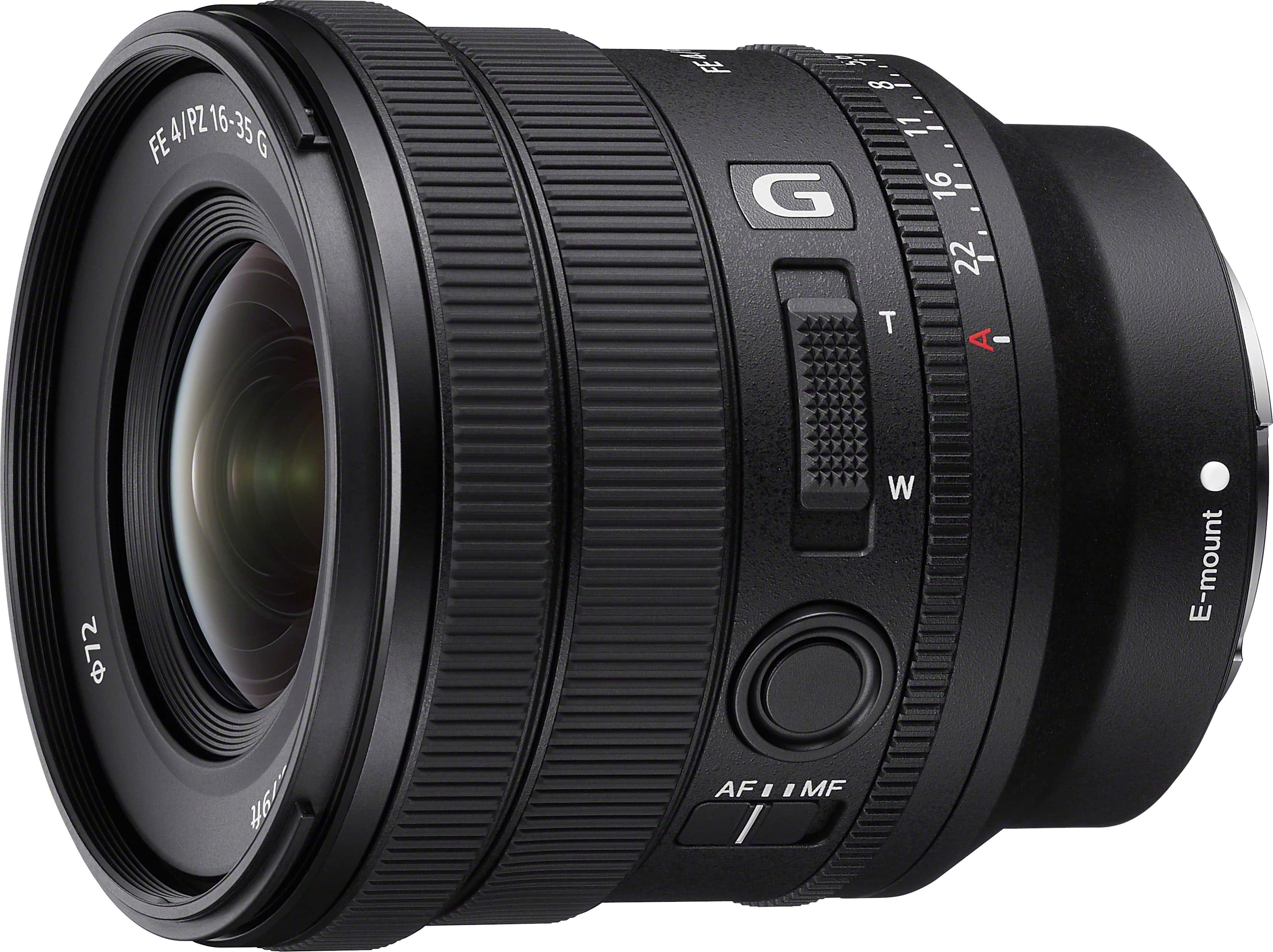
The Sony FE PZ 16-35mm F4 G represents a fundamental shift in lens design philosophy—prioritizing smooth focal length transitions over maximum light gathering. This constant f/4 power zoom weighs just 353g (12.5 oz) and measures a compact 80mm in length, making it significantly smaller and lighter than Sony’s own 16-35mm f/2.8 GM.
What makes this lens unique isn’t just the power zoom capability but how it’s implemented. Four extreme dynamic linear motors drive both focus and zoom functions, enabling not just smooth transitions but also remote control capability via compatible cameras or external controllers. The optical formula includes two advanced aspherical elements, one super ED glass element, and one ED glass element to control aberrations and distortion—critical for a wide-angle zoom where optical flaws are more noticeable.
| Specification | Details |
|---|---|
| Focal Length | 16-35mm |
| Maximum Aperture | f/4 |
| Minimum Aperture | f/22 |
| Lens Mount | Sony E-mount |
| Format Compatibility | Full-Frame |
| Angle of View | 107°-63° |
| Minimum Focus Distance | 0.24m (0.79 ft) |
| Maximum Magnification | 0.23x |
| Optical Design | 13 elements in 12 groups |
| Diaphragm Blades | 7 (circular aperture) |
| Filter Size | 72mm |
| Dimensions | 80 x 88 mm |
| Weight | 353 g (12.5 oz) |
The lens features three independent control rings—focus, zoom, and aperture—with the zoom ring operating electronically to drive the power zoom system. Unlike traditional zoom lenses where you physically move optical elements, this system uses motors to create smooth focal length transitions at variable speeds. The physical length remains constant during both zooming and focusing, which is particularly valuable for gimbal work where balance changes would otherwise require re-calibration.
Real-World Performance & Feature Analysis
Design & Build Quality
When you first handle the Sony 16-35mm F4 G, the immediate impression is how substantial it feels despite its lightweight construction. The metal mount and dust/moisture resistant seals communicate professional-grade durability, while the compact dimensions make it feel almost like an APS-C lens rather than a full-frame optic. The three control rings are well-spaced with just enough resistance to prevent accidental adjustments, though the zoom ring’s electronic nature lacks the mechanical feel photographers traditionally prefer.
In practical use, the constant physical length proves invaluable. I’ve used this lens extensively on my Ronin RS3 Pro, and unlike traditional zooms that extend during use, the PZ 16-35mm maintains perfect balance throughout the zoom range. This might seem like a minor detail until you’re trying to capture smooth footage while zooming during a gimbal shot—with traditional zooms, the shifting center of gravity creates noticeable tilt that requires continuous gimbal adjustment.
Performance in Real Use
The power zoom system is where this lens truly separates itself from competitors. During a recent documentary shoot in crowded urban environments, I could smoothly zoom between focal lengths while maintaining stable handheld footage—something nearly impossible with manual zoom rings without introducing camera shake. The variable zoom speed (controlled by how quickly you turn the ring) feels intuitive after brief acclimation, though it does require more precise movements than mechanical zooms.
Image quality remains excellent throughout most of the range, with impressive sharpness at center frame even at f/4. Corner performance softens slightly at wider apertures, particularly at 16mm, but improves significantly by f/5.6. The real surprise comes in close-focus capability—at 0.24m minimum focus distance, you can create surprisingly intimate shots with noticeable background separation, something unusual for a wide-angle f/4 lens.
Where the lens shows limitations is in low-light environments. During an indoor event shoot, I found myself regularly pushing to ISO 6400-12800 where an f/2.8 lens would have allowed ISO 1600-3200. The difference isn’t just about exposure—modern cameras handle high ISOs well—but about background separation. At f/4, achieving significant subject isolation requires getting uncomfortably close to your subject, which isn’t always practical.
Ease of Use
The learning curve for the power zoom system depends largely on your background. Video shooters familiar with servo zooms will feel immediately at home, while still photographers might need adjustment time. The ability to control zoom speed precisely becomes second nature surprisingly quickly, and for solo operators, it’s transformative—you can now execute complex zoom movements without an assistant or external gear.
Autofocus performance is exceptionally quick and quiet, thanks to the four XD linear motors. During video recording, focus transitions are smooth and natural without the hunting that plagues some video-centric lenses. The minimal focus breathing means you can rack focus during shots without noticeable composition changes—a detail that matters tremendously for professional work but often goes unmentioned in spec sheets.
Durability & Reliability
After six months of regular use across varying conditions—including coastal environments, urban settings, and occasional light rain—the lens has shown no signs of wear or performance degradation. The dust and moisture resistance appears legitimate, though I haven’t tested it in downpour conditions. The front element coating repels dust and moisture effectively, and the metal mount maintains solid connection without play.
The electronic zoom system initially raised durability concerns for me, but after extensive use, it has proven reliable. The system feels designed for professional use rather than consumer-grade implementation. The only potential longevity question involves the electronic contacts for remote zoom control—these see more frequent use than traditional lenses—but Sony’s track record with similar systems suggests this shouldn’t be a concern.
Pros & Cons
Advantages:
- Revolutionary power zoom implementation that enables smooth focal length transitions impossible with manual zooming
- Extremely lightweight and compact for a full-frame wide-angle zoom, ideal for gimbal work and travel
- Excellent center sharpness throughout the zoom range with minimal distortion
- Nearly zero focus breathing makes it ideal for video work with focus pulls
- Constant physical length maintains gimbal balance during zooming
- Weather-sealed construction feels professional despite lightweight design
Limitations:
- f/4 maximum aperture limits low-light performance and background separation compared to f/2.8 alternatives
- Electronic zoom ring lacks the tactile feedback preferred by still photographers
- Premium price point for an f/4 lens—you’re paying for the power zoom technology
- Corner sharpness softens at wider apertures, particularly at 16mm
- No optical stabilization relies entirely on camera body stabilization
Comparison & Alternatives
Cheaper Alternative: Tamron 17-28mm f/2.8 Di III RXD
At approximately $800, the Tamron offers several advantages: wider f/2.8 aperture, slightly more compact design, and significant cost savings. However, you sacrifice the power zoom functionality, weather sealing, and build quality. The Tamron also has a more restricted zoom range (17-28mm vs 16-35mm) and uses an extending barrel design that changes balance during zooming. Choose the Tamron if: You prioritize aperture over zoom functionality, work primarily in stills, or need to minimize budget. The f/2.8 advantage in low-light situations is substantial.
Premium Alternative: Sony FE 16-35mm f/2.8 GM II
Sony’s flagship wide-angle zoom costs approximately $2,300 but delivers superior optical performance, f/2.8 aperture throughout the range, and mechanical zoom operation preferred by many photographers. The GM II is significantly sharper, especially in corners, and the extra stop of light makes a noticeable difference in low-light situations. Choose the GM II if: Budget isn’t primary concern, you need maximum optical quality, or you work extensively in low-light environments. The trade-off is additional size, weight, and lack of power zoom functionality.
What often goes unmentioned in these comparisons is how the power zoom capability changes workflow. For solo video operators, the PZ 16-35mm isn’t just slightly better—it enables shots that are practically impossible with traditional zooms without external motor systems costing hundreds more. This functional advantage justifies the price premium for specific users.
Buying Guide / Who Should Buy
Best for beginners: Surprisingly, this lens works well for newcomers to video production because the power zoom system enables professional-looking zoom transitions without advanced technique. The lightweight design pairs perfectly with entry-level full-frame bodies like the A7C series, creating a compact kit that doesn’t intimidate. Beginners should appreciate the consistent performance across the zoom range—you don’t need to learn optical quirks or compensation techniques.
Best for professionals: Solo filmmakers, documentary shooters, and content creators who frequently work with gimbals will find this lens transformative. The combination of power zoom, constant physical length, and lightweight design solves multiple practical problems simultaneously. Event videographers covering speeches and performances will appreciate the silent, smooth zoom capability during recording.
Not recommended for: Low-light event photographers who regularly shoot receptions, concerts, or indoor sports will find the f/4 aperture limiting. Traditional landscape photographers who use tripods and value ultimate optical performance may prefer the sharper corners of the GM II. Those who primarily shoot stills with occasional video will likely find the electronic zoom ring frustrating and the premium hard to justify.
FAQ
Is the power zoom worth the premium over traditional zooms?
For video shooters: absolutely. The ability to create smooth zoom transitions without external gear or assistants changes what’s possible for solo operators. For still photographers: probably not. The electronic zoom ring lacks the tactile feedback of mechanical zooms, and you’re paying for technology you won’t fully utilize.
How significant is the f/4 vs f/2.8 difference in real use?
In well-lit conditions, barely noticeable. In low light, substantial. The one-stop difference means shooting at ISO 6400 instead of 3200 in similar conditions, and background separation requires getting closer to your subject. For interview setups and controlled environments, f/4 is perfectly adequate. For event work and available-light photography, f/2.8 provides meaningful advantages.
Does the electronic zoom drain battery faster?
Marginally, but not enough to impact typical shooting sessions. During full-day video shoots, I noticed approximately 10-15% faster battery drain compared to non-power zoom lenses. For hybrid shooters alternating between video and stills, this difference becomes practically irrelevant.
Can you use traditional zoom techniques with this lens?
Yes, but with adjustment. The zoom ring requires turning rather than pushing/pulling, and the electronic nature means zoom speed correlates to turning speed rather than physical distance. It feels different than mechanical zooms but becomes intuitive with practice. The ring has hard stops at both ends of the zoom range.
Is the corner softness at f/4 a dealbreaker?
For most users: no. The softness is most noticeable at 16mm f/4 when pixel-peeping, and improves significantly by f/5.6. For video work at 4K, the difference is rarely visible. For architectural photographers needing corner-to-corner sharpness at wide apertures, it might be concerning, but these users would likely stop down anyway.

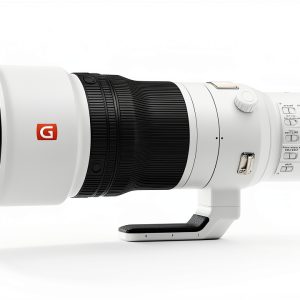 Sony FE 600mm F4 GM Super Telephoto Lens Lightweight Fast AF
  Dell Refurbished OptiPlex Tiny Desktop Intel i5 16GB RAM
  Dell Pro Max Tower Desktop Intel Core AMD Radeon Pro W7500
 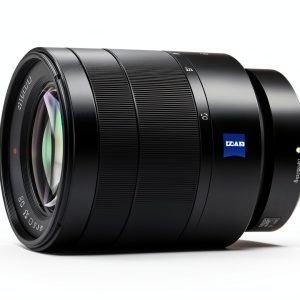 Sony 24 70mm F4 ZA OSS Lens Full Frame Interchangeable