Table of Contents
If you’re researching the Nikon NIKKOR Z 50mm f/1.8 S, you’re likely standing at a crossroads familiar to every photographer: do you invest in what appears to be just another standard prime, or is this something genuinely special? Having shot with this lens extensively across weddings, street photography, and commercial work, I can tell you this isn’t your typical 50mm f/1.8. Nikon’s engineers approached this ‘humble’ lens with surprising ambition, creating what many professionals now consider one of the most compelling reasons to invest in the Z system.
The problem most photographers face with standard primes is the compromise between optical quality, build quality, and price. You either get excellent optics in a bulky, expensive package, or affordable convenience with optical shortcomings. The Z 50mm f/1.8 S sits in a fascinating middle ground that redefines expectations for what an f/1.8 prime can deliver.
Key Takeaways
- Exceptional sharpness wide open separates this from most 50mm f/1.8 lenses, making it usable at maximum aperture without reservations
- Professional build quality with weather sealing and control ring elevates it above typical ‘kit’ prime expectations
- Silent, reliable autofocus performs well for both photography and video, though not the fastest in the Z lineup
- Significantly larger and heavier than competing 50mm f/1.8 options, which may matter for compact system enthusiasts
- Outperforms its price point optically but costs nearly twice as much as some competing system’s 50mm f/1.8 lenses
Quick Verdict
Best for: Portrait photographers seeking flattering rendering, Z system owners wanting a do-everything prime, hybrid shooters needing quiet AF, and anyone prioritizing optical excellence over minimal size.
Not ideal for: Ultralight travel setups, budget-conscious beginners, photographers needing lightning-fast AF for sports, or those wanting the absolute maximum background blur.
Core strengths: Razor-sharp optics even at f/1.8, professional build with weather resistance, beautiful bokeh transition, completely silent STM autofocus, and exceptional color rendition.
Core weaknesses: Noticeably larger than competing 50mm f/1.8 options, autofocus isn’t the fastest in class, price premium over some alternatives, and no optical stabilization.
Product Overview & Specifications
The Nikon NIKKOR Z 50mm f/1.8 S represents Nikon’s reimagining of the standard prime for the mirrorless era. While the 50mm focal length has been a photography staple for decades, this lens approaches it with no-compromise optics that would have been unthinkable at this price point in the DSLR era. The ‘S’ designation isn’t marketing fluff – it signifies Nikon’s serious approach to what many would consider an entry-level focal length.
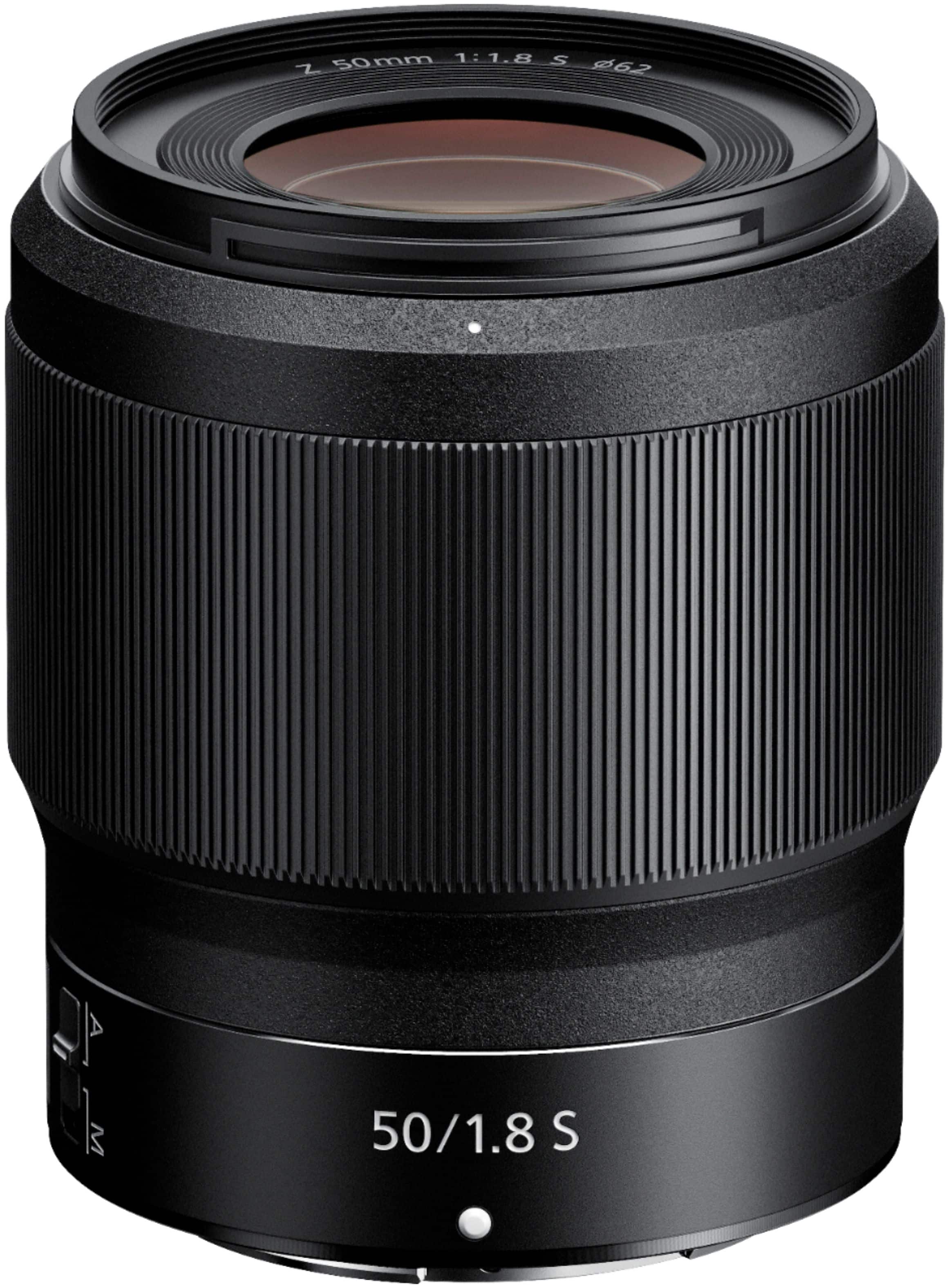
What sets this lens apart immediately is its optical formula. With 12 elements in 9 groups, including two ED elements and two aspherical elements, it’s significantly more complex than most 50mm designs. This complexity translates to real-world performance benefits I’ll detail shortly, particularly in controlling aberrations and maintaining sharpness across the frame.
| Specification | Details |
|---|---|
| Focal Length | 50mm |
| Maximum Aperture | f/1.8 |
| Minimum Aperture | f/16 |
| Lens Construction | 12 elements in 9 groups |
| Special Elements | 2 ED elements, 2 aspherical elements |
| Coatings | Nano Crystal Coat |
| Autofocus | Stepping motor (STM) |
| Manual Focus | Override with control ring |
| Aperture Blades | 9 rounded blades |
| Filter Size | 62mm |
| Weather Sealing | Yes (dust/drip resistant) |
| Dimensions | ≈76mm diameter, 86.5mm length |
| Weight | 415g (14.6oz) |
Real-World Performance & Feature Analysis
Design & Build Quality
Unboxing the Nikon Z 50mm f/1.8 S, the first thing you notice is that it feels substantial – almost surprisingly so for a 50mm f/1.8. The metal mount and tightly toleranced construction immediately communicate this isn’t a budget optic. The control ring is a particular highlight, offering customizable functionality that I typically set to exposure compensation for quick adjustments without taking my eye from the viewfinder.
The weather sealing gives genuine peace of mind when shooting in challenging conditions. I’ve used this lens in light rain and dusty environments without issue, something I’d never attempt with most other 50mm f/1.8 lenses. The trade-off for this build quality is weight: at 415g, it’s noticeably heavier than Canon’s RF 50mm f/1.8 (160g) or Sony’s FE 50mm f/1.8 (186g). For some, this heft communicates quality; for others, it defeats the purpose of a compact mirrorless setup.
Performance in Real Use
Where this lens truly shines is optical performance. The sharpness at f/1.8 is exceptional – I regularly shoot portraits wide open with confidence, knowing I’m capturing critical detail without the softness that plagues many fast primes at maximum aperture. Stopping down to f/2.8 provides negligible improvement, which speaks to how well-corrected this lens is from the start.
The autofocus is silent and accurate, making it ideal for wedding ceremonies, video work, or any situation where discretion matters. It’s not the fastest focusing lens in the Z lineup – the 50mm f/1.2 S focuses more quickly – but it’s consistently reliable for portrait, street, and general photography. Where it occasionally struggles is in very low light with low-contrast subjects, but this is typical of most lenses in this class.
Scenario 1: Indoor Event Photography
Shooting a corporate event in mixed lighting, the Z 50mm f/1.8 S delivered consistently. The silent AF didn’t disturb speakers, while the sharpness at f/1.8 allowed me to maintain reasonable shutter speeds in dimly lit rooms. The natural perspective meant I could capture both environmental shots and tighter portraits without distortion concerns. The lack of stabilization wasn’t an issue on IBIS-equipped Z bodies, but would be more noticeable on the Z50 or other non-IBIS cameras.
Scenario 2: Street Portraiture
Working with subjects in urban environments, the lens rendered skin tones beautifully and handled backlit situations with minimal flare thanks to the Nano Crystal Coat. The bokeh transitions smoothly without busy patterns, creating professional-looking separation even in cluttered backgrounds. The focal length felt natural for environmental portraits, though I occasionally wished for either a slightly wider (35mm) or longer (85mm) perspective for variety.
Ease of Use
This lens strikes an interesting balance between accessibility and professional features. Beginners will appreciate that it basically behaves like a point-and-shoot lens with fantastic image quality – set it to Auto and you’ll get great results. More advanced users will utilize the control ring and manual focus override for precise control.
The 50mm focal length is famously versatile, but it does require you to ‘zoom with your feet.’ This forces compositional consideration that can improve your photography, but might feel restrictive if you’re coming from a zoom lens. On crop-sensor Z cameras like the Z50, the effective 75mm focal length becomes an excellent portrait length, though you lose the standard perspective.
Durability & Reliability
After nearly two years of regular use, my copy has shown no signs of wear beyond typical cosmetic marks. The finish has proven resistant to scratching, and the focus ring remains smooth with no play. The front element coating has repelled fingerprints and cleaning without issue. This feels like a lens built to last through professional use, which justifies part of its price premium over more consumer-oriented options.
Pros & Cons
Pros:
- Exceptional sharpness even at f/1.8 – rare in this price category
- Beautiful bokeh with smooth transitions
- Professional build quality with weather sealing
- Silent, accurate autofocus ideal for video
- Natural color rendition and contrast
- Effective control ring for quick adjustments
- Minimal distortion and vignetting
Cons:
- Significantly larger and heavier than competing 50mm f/1.8 options
- Autofocus isn’t the fastest in low-light situations
- Price premium over some system alternatives
- No optical stabilization (relies on camera IBIS)
- Can feel too ‘perfect’ for those preferring character lenses
Comparison & Alternatives
Cheaper Alternative: Canon RF 50mm f/1.8 STM
At roughly half the price, Canon’s offering is compelling for budget-conscious photographers. However, you’re trading significant optical quality, build quality, and features. The Canon lens is plasticky, lacks weather sealing, shows noticeable softness at f/1.8, and has more audible autofocus. Choose the Canon if: budget is your primary concern, you prioritize minimal size/weight, or you occasionally use the 50mm focal length.
Premium Alternative: Nikon NIKKOR Z 50mm f/1.2 S
For those needing the absolute best optical performance and brighter aperture, the f/1.2 version exists at nearly three times the price. You gain approximately 2/3 stop of light, slightly smoother bokeh, and marginally better sharpness. However, it’s significantly larger and heavier (1090g vs 415g). Choose the f/1.2 if: You regularly shoot in extremely low light, need the ultimate background separation for professional portraits, or money is no object.
Cross-System Comparison: Sony FE 50mm f/1.8
Sony’s offering sits closer to Canon’s in price and approach – it’s a compact, affordable 50mm with adequate performance. It suffers from slower, noisier autofocus and softer corners wide open. The Nikon is objectively better optically and in construction, but comes at a substantial price premium. The value proposition depends on how much you prioritize optical excellence versus budget.
Buying Guide / Who Should Buy
Best for beginners: If you’re new to photography and willing to invest in quality, this lens will grow with you. The results at Auto settings are excellent, while the manual controls provide learning opportunities as your skills develop. Just be aware it represents a significant investment for a beginner.
Best for professionals: As a professional portrait and wedding photographer, this lens has earned a permanent place in my kit. It delivers client-ready image quality in a relatively compact package. The build quality stands up to professional use, and the optical performance eliminates the need to stop down for sharpness.
Not recommended for:
- Ultralight travel photographers – the size/weight defeats the purpose of a compact kit
- Sports/wildlife shooters – the AF isn’t optimized for fast action
- Budget-focused beginners – the price might be better spent on multiple used lenses
- Those wanting ‘character’ – this lens is clinically sharp and well-corrected
FAQ
Is the Nikon Z 50mm f/1.8 S worth the price premium over cheaper 50mm options?
If you value optical performance, build quality, and professional features, absolutely. The difference in real-world image quality is substantial, particularly when shooting wide open. For casual photographers who mostly share images online, the cheaper options might suffice.
How does this lens perform on crop-sensor Z cameras like the Z50?
Excellent, though you’re effectively getting a 75mm equivalent focal length. This makes it less versatile as a general-purpose lens but outstanding for portraits. The optical quality remains superb since you’re using the sweet spot of the image circle.
Is the lack of optical stabilization a problem?
On Z bodies with in-body stabilization (Z5, Z6, Z7 series and above), not at all. The IBIS works excellently. On bodies without IBIS (Z30, Z50, Zfc), you’ll need to maintain higher shutter speeds in low light.
Can this lens replace a standard zoom?
For many photographers, yes. The optical quality surpasses most standard zooms, and the fast aperture provides more creative flexibility. The limitation is obviously the fixed focal length, which requires you to move to recompose.
How does it compare to the F-mount 50mm f/1.8G with FTZ adapter?
The native Z lens is significantly sharper, especially in the corners, has quieter AF, and eliminates the need for an adapter. The F-mount version remains a budget option, but you’re compromising on optical performance and convenience.
 Dell Copilot Plus PC 16 Inch 2 in 1 Laptop Intel Core Ultra