Table of Contents
You’re holding your Nikon Z camera, scrolling through lens options, and hitting the same wall: you want something small enough for everyday carry but capable enough for professional results. The kit zoom feels bulky and slow. Premium primes cost a fortune. There’s this gap between convenience and quality that feels impossible to bridge.
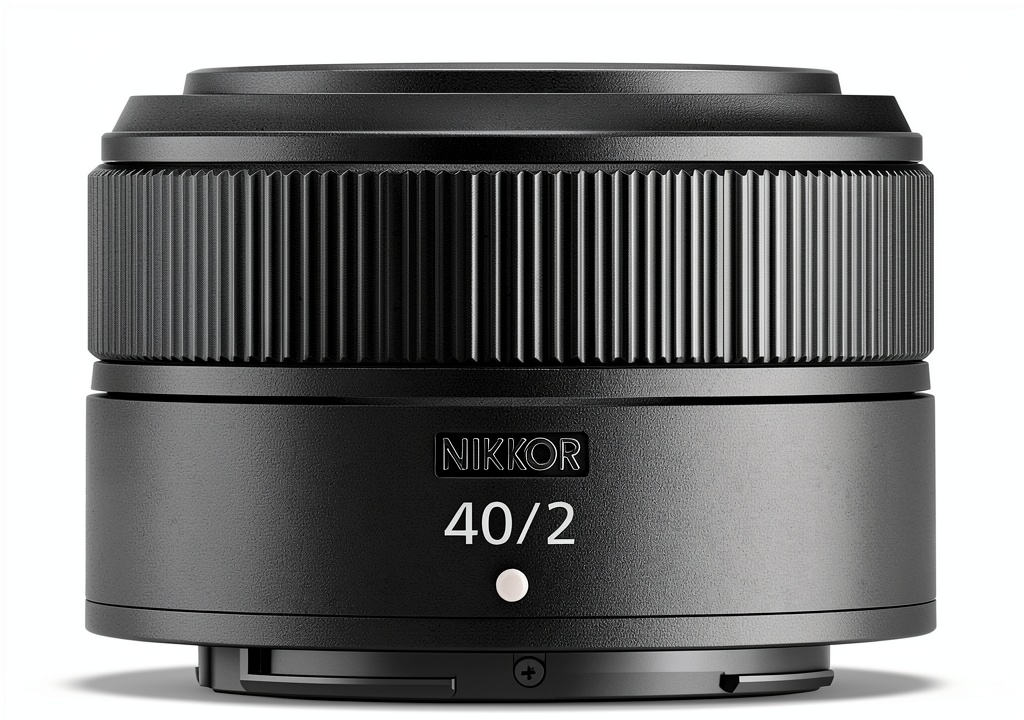
I’ve been there, and after shooting thousands of frames with the Nikon NIKKOR Z 40mm f/2 across weddings, street photography, and daily life, I can tell you this lens exists to solve exactly that problem. It’s not the sharpest lens Nikon makes, nor the cheapest, but it might be the most practical addition to your camera bag.
Key Takeaways
- The 40mm f/2 delivers surprising optical performance for its size and price, with excellent center sharpness at f/2.8 and beyond
- This lens truly shines in low-light situations where larger, heavier lenses would stay home
- The 40mm focal length (60mm equivalent) creates natural-looking portraits without distortion
- Build quality is good but not premium – you’re trading some durability for light weight
- It makes an ideal second lens after your kit zoom or a discreet primary for travel
Quick Verdict
Best for: Travel photographers, content creators, and anyone needing a lightweight low-light solution who values portability over absolute optical perfection.
Not ideal for: Professional portrait photographers needing razor-edge sharpness across the frame, videographers requiring completely silent autofocus, or those shooting primarily in bright daylight where cheaper alternatives perform similarly.
Core strengths: Remarkably compact design, fast aperture for the size, quick and accurate autofocus, natural focal length for everyday use.
Core weaknesses: Noticeable corner softness wide open, plastic construction that feels less premium, some chromatic aberration in high-contrast scenes.
Product Overview & Specifications
The Nikon NIKKOR Z 40mm f/2 sits in that sweet spot between Nikon’s compact primes and their professional S-line lenses. At 40mm (60mm full-frame equivalent), it gives you a slightly tighter perspective than a standard 35mm, making it more flattering for portraits while remaining wide enough for environmental shots.
What makes this lens special isn’t any single spec – it’s the combination of size, speed, and price that rarely appears together. The f/2 maximum aperture means you can shoot in dim restaurants, evening streets, or indoor events without cranking your ISO to noisy levels. The 0.96-foot minimum focus distance lets you get surprisingly close to subjects, adding creative flexibility you wouldn’t expect from a lens this small.
| Specification | Details |
|---|---|
| Focal Length | 40mm (60mm equivalent on APS-C) |
| Maximum Aperture | f/2 |
| Minimum Aperture | f/16 |
| Lens Construction | 6 elements in 4 groups |
| Stabilization | No (relies on camera IBIS) |
| Autofocus | Stepping motor with full-time manual |
| Filter Size | 52mm |
| Minimum Focus | 0.96 ft (0.29 m) |
| Weight | 6 oz (170 g) |
| Dimensions | 2.8 in diameter x 1.8 in length |
Real-World Performance & Feature Analysis
Design & Build Quality
When you first handle the 40mm f/2, the immediate impression is how incredibly light it feels. At just 170 grams, it barely registers on your camera. The plastic construction contributes to this weight savings, but it comes with a trade-off: the lens doesn’t have the same solid, metal feel of Nikon’s S-line primes. I’ve carried this lens through months of daily use without issues, but it doesn’t inspire the same confidence as more expensive alternatives.
The customizable control ring is where this lens punches above its weight class. You can set it to adjust aperture, exposure compensation, or ISO without taking your eye from the viewfinder. For street photography, I set mine to aperture control, allowing quick transitions between deep depth-of-field for environmental shots and shallow depth-of-field for isolating subjects. The ring turns smoothly but lacks the precise click stops of higher-end lenses.
Performance in Real Use
Sharpness: Here’s where specs don’t tell the full story. Wide open at f/2, center sharpness is surprisingly good – easily usable for professional work. The corners, however, show noticeable softness that doesn’t fully resolve until around f/4. In practice, this means your subject’s eyes will be sharp while the edges of the frame show some fall-off. For portraits and street photography, this rarely matters since your subject typically occupies the center. For architecture or landscape work, you’ll want to stop down.
Low Light Performance: This is where the 40mm f/2 truly earns its keep. I’ve shot wedding receptions in dimly lit venues where this lens allowed me to keep my ISO at 3200 instead of 12800 compared to a kit zoom. The difference in image quality is substantial. The autofocus remains snappy even in challenging light, rarely hunting except in near-darkness.
Bokeh & Background Separation: The 9-blade diaphragm creates pleasant, smooth bokeh that’s more refined than you’d expect at this price point. It won’t give you the creaminess of Nikon’s 50mm f/1.2 S, but it creates beautiful separation between subject and background. The 40mm focal length provides more natural compression than a 35mm, making portraits more flattering without the tight framing of a 50mm.
Ease of Use
The 40mm f/2 practically disappears on your camera, making it ideal for travel or street photography where discretion matters. I’ve carried it through full days of shooting without fatigue – something I can’t say about most other fast primes. The autofocus is near-silent and reasonably quick, though not as instantaneous as Nikon’s flagship lenses. For still photography, it’s more than adequate; for video, the focusing is smooth but audible enough that you’ll want an external microphone.
What surprised me most was how this lens changed my shooting habits. Because it’s so small and light, I found myself taking my camera more places and shooting more frequently. That intangible benefit – the lens that actually gets used – might be its greatest strength.
Durability & Reliability
After six months of regular use, my copy has held up well despite being tossed in bags and used in light rain. The plastic construction shows minor scuffing but no functional issues. The mount is metal, which is crucial for long-term durability. The front element has held up without scratches, though I recommend a UV filter since replacement wouldn’t be cheap.
This isn’t a lens I’d worry about using in challenging conditions, but it also doesn’t feel like it would survive a significant drop. For professional photographers who treat gear harshly, the build quality might be a concern. For everyone else, it’s perfectly adequate.
Pros & Cons
Pros:
- Remarkably compact and light – you’ll actually carry it everywhere
- Fast f/2 aperture delivers excellent low-light performance
- Surprisingly good center sharpness stopped down slightly
- Quick, accurate autofocus that rarely hunts
- Natural 40mm focal length works for both environmental and portrait shots
- Customizable control ring adds professional functionality
- Excellent value for the performance offered
Cons:
- Corner softness wide open limits usefulness for landscapes
- Plastic construction feels less premium than metal alternatives
- Some chromatic aberration in high-contrast situations
- Autofocus audible for video work
- No weather sealing beyond basic dust resistance
Comparison & Alternatives
Cheaper Alternative: Nikon Z 28mm f/2.8
If budget is your primary concern, the 28mm f/2.8 costs significantly less while being even smaller. The trade-off is substantial: you lose a full stop of light gathering (f/2.8 vs f/2) and get a wider 28mm focal length that’s less ideal for portraits. I’d choose the 28mm only if you primarily shoot in good light or need an ultra-wide perspective for street photography.
Premium Alternative: Nikon Z 35mm f/1.8 S
Nikon’s 35mm f/1.8 S costs more than twice as much but delivers professional-grade optics across the entire frame. The build quality is superior with weather sealing, the sharpness is exceptional even wide open, and the rendering is more polished. If you’re making money with your camera or demand optical perfection, the 35mm S is worth the investment. For everyone else, the 40mm f/2 delivers 85% of the performance at less than half the price.
Wild Card: Used F-mount 35mm f/1.8 with FTZ adapter
You might find used F-mount lenses for slightly less, but once you add the cost and bulk of the FTZ adapter, the size advantage disappears completely. The native Z-mount design of the 40mm f/2 provides better autofocus performance and a more compact overall package.
Buying Guide / Who Should Buy
Best for Beginners: If you’re moving beyond your kit zoom, this lens teaches excellent photographic fundamentals. The fixed focal length forces you to move to compose shots, and the fast aperture introduces you to creative depth-of-field control. It’s an affordable way to significantly upgrade your image quality without a steep learning curve.
Best for Professionals: As a secondary lens for travel, events, or situations where discretion matters, the 40mm f/2 excels. I keep mine in my bag as a backup or for when I need to travel light. The image quality is sufficient for professional work, particularly for social media content or web publication.
Not Recommended For: Landscape photographers needing edge-to-edge sharpness, videographers requiring silent autofocus, or anyone shooting primarily in studio conditions with controlled lighting. In these scenarios, you’re either not using the lens’s strengths or are hampered by its limitations.
FAQ
How does the 40mm f/2 compare to the kit zoom at similar focal lengths?
The kit zoom typically maxes out at f/4-5.6, meaning the 40mm f/2 gathers 2-3 stops more light. In practical terms, you can shoot at ISO 1600 where the kit zoom would require ISO 6400-12800. The prime is also significantly sharper throughout its aperture range.
Is the corner softness really a problem for real-world photography?
For most shooting scenarios, no. In portraits, your subject occupies the center frame. In street photography, the slight fall-off can actually enhance the image by drawing attention to your subject. Only in architectural or landscape work where edge detail matters does it become noticeable.
Should I choose the 40mm f/2 or save for a more expensive prime?
If you regularly shoot in low light or value portability, buy the 40mm f/2 now. If you mostly shoot in good light and can wait, save for a premium option. The 40mm delivers immediate benefits that outweigh waiting months for a theoretically better lens.
How does this lens perform on APS-C Z-mount cameras?
On APS-C bodies like the Z50, the 40mm becomes a 60mm equivalent – making it an ideal portrait length. The corner softness becomes less relevant since you’re using primarily the center portion of the image circle.
Is the lack of weather sealing a deal-breaker?
For most users, no. I’ve used mine in light rain without issues, though I wouldn’t expose it to heavy precipitation. If you regularly shoot in challenging weather, consider a weather-sealed alternative or use a protective cover.
 1688商品