Table of Contents
- Key Takeaways
- Quick Verdict
- Product Overview & Specifications
- Real-World Performance & Feature Analysis
- Design & Build Quality
- Performance in Real Use
- Ease of Use
- Durability & Reliability
- Pros & Cons
- Comparison & Alternatives
- Cheaper Alternative: Fujifilm XF10-24mm f/4 R OIS
- Premium Alternative: Prime Lens Collection (XF 14mm f/2.8 + XF 16mm f/1.4)
- Buying Guide / Who Should Buy
- FAQ
You’re standing at the edge of a canyon, watching sunset light paint the rock faces. Your current lens can’t capture the scale. You switch to your phone’s panorama mode, but the distortion makes the cliffs look curved. This is the moment you realize you need a proper ultra-wide lens – but is Fujifilm’s premium 8-16mm f/2.8 the solution, or just overkill for most photographers?
Having shot with this lens through desert storms, crowded city streets, and tight interior spaces, I can tell you it’s both revolutionary and frustrating in equal measure. The Fujifilm XF8-16mm f/2.8 isn’t just another wide-angle lens – it’s an optical statement that demands you rethink how you approach wide-angle photography entirely.
Key Takeaways
- Unmatched field of view – The 8mm end delivers truly dramatic perspectives that few lenses can match
- Weather resistance matters – The WR construction is genuinely useful for outdoor photographers
- Size and weight are significant – This isn’t a casual travel lens despite its focal range
- Filter compatibility requires workarounds – No front filter threads mean creative solutions for ND filters
- Price positions it as a specialist tool – Better alternatives exist for budget-conscious photographers
Quick Verdict
Best for: Professional landscape photographers, architectural specialists, and serious enthusiasts who need the absolute widest perspective and weather protection for paid work or demanding personal projects.
Not ideal for: Casual travelers, vloggers, or photographers on a budget who prioritize portability and convenience over ultimate optical performance.
Core strengths: Unmatched 8mm wide-end, consistent f/2.8 aperture throughout zoom range, exceptional build quality with genuine weather sealing, and virtually distortion-free optical performance.
Core weaknesses: Bulky and heavy for a mirrorless lens, no front filter threads requiring expensive adapter systems, significant price premium over alternatives, and the ultra-wide perspective requires substantial skill to master.
Product Overview & Specifications
The Fujifilm XF8-16mm f/2.8 R LM WR represents the pinnacle of ultra-wide zoom design for the X-mount system. With an equivalent focal range of 12-24mm in full-frame terms, it covers everything from extreme wide-angle to standard wide perspectives. The constant f/2.8 aperture maintains exposure consistency and subject isolation capabilities throughout the zoom range – a rarity in ultra-wide zooms.
| Specification | Details |
|---|---|
| Focal Length | 8-16mm (12-24mm equivalent) |
| Maximum Aperture | f/2.8 |
| Minimum Aperture | f/22 |
| Lens Construction | 20 elements in 13 groups |
| Special Elements | 4 aspherical, 3 ED elements |
| Aperture Blades | 9 rounded |
| Weather Sealing | Yes (WR designation) |
| Filter Thread | None (bulbous front element) |
| Weight | 805g (1.78 lbs) |
| Length | 121.5mm |
What these specifications don’t tell you is how this lens feels in daily use. The weight distribution is front-heavy on smaller Fujifilm bodies like the X-T series, requiring a firm grip or additional battery grip for comfortable handling. The absence of filter threads isn’t just an inconvenience – it’s a fundamental design compromise that affects how landscape photographers work.
Real-World Performance & Feature Analysis
Design & Build Quality
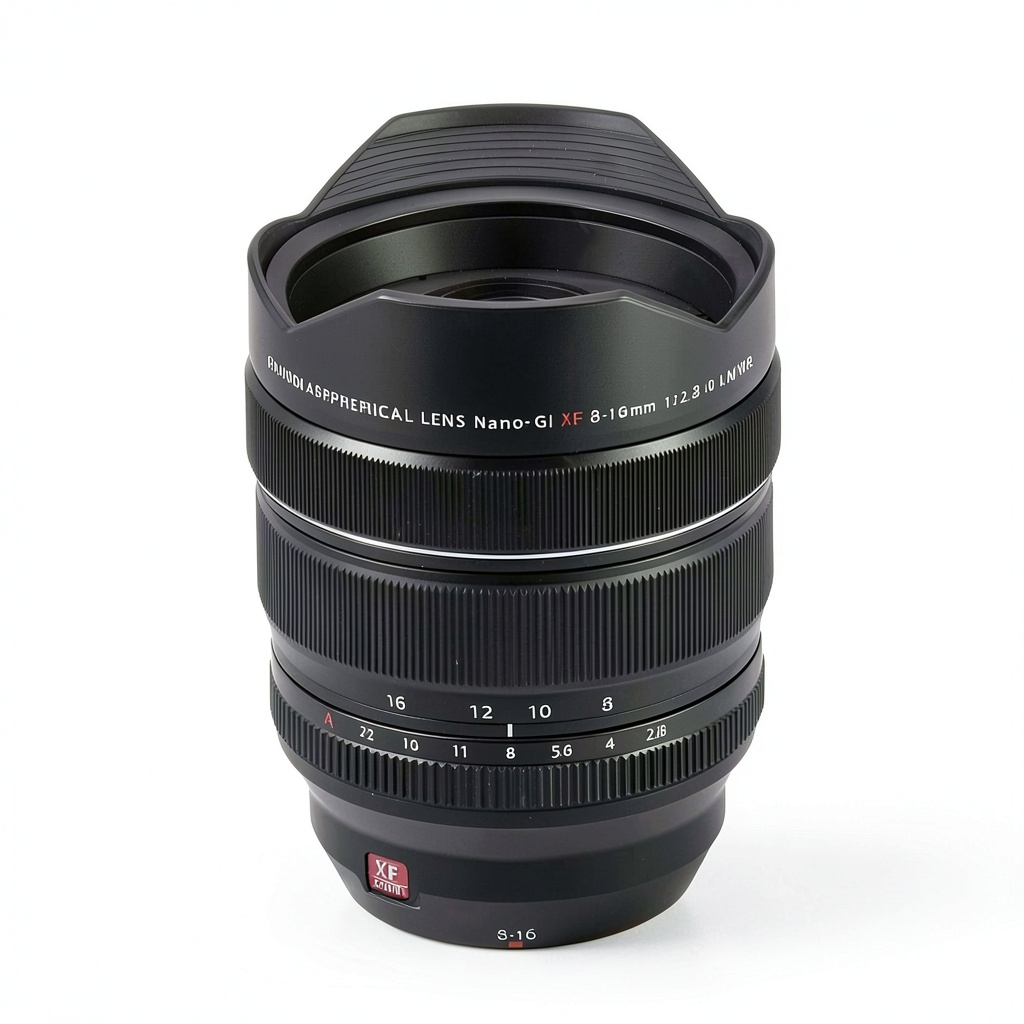
Picking up the XF8-16mm for the first time feels like handling professional-grade equipment. The metal barrel and substantial zoom ring communicate durability, but also heft. Compared to Fujifilm’s f/2 prime lenses, this feels like a different class of product entirely.
The weather sealing isn’t just marketing speak. I’ve used this lens in light rain and dusty desert conditions without issue, though I wouldn’t submerge it or use it in heavy downpours without additional protection. The zoom action is smooth but firm – it won’t creep when pointed downward, which is essential for hiking and architectural work.
The missing filter threads represent the biggest practical compromise. Landscape photographers relying on ND filters for long exposures need to invest in rear gel filter systems or bulky adapter solutions that defeat the lens’s portability advantages.
Performance in Real Use
At 8mm, the perspective is genuinely breathtaking – and challenging to compose. You need to get uncomfortably close to foreground elements to create compelling images, which changes how you approach landscape photography. The distortion control is exceptional for such a wide lens, with virtually no mustache distortion that plagues many ultra-wides.
The f/2.8 aperture proves valuable in more situations than you might expect. I’ve used it for:
- Astrophotography at 8mm – Capturing the Milky Way with minimal star trailing at lower ISOs
- Indoor events – Environmental portraits in tight spaces where flash wasn’t permitted
- Northern lights – The fast aperture gathers more light during aurora displays
Autofocus performance is quick and nearly silent, making it suitable for video work. The linear motor ensures smooth focus transitions rather than the jarring jumps common in cheaper lenses.
Ease of Use
Mastering the 8-16mm requires rethinking your photographic approach. The extreme width means everything appears smaller in the frame, requiring you to actively seek out strong foreground elements. I’ve found it most effective when:
- Shooting from low angles to emphasize foreground elements
- Using leading lines that stretch from the immediate foreground to the background
- Working in confined spaces where other lenses can’t fit the scene
The learning curve is substantial. Beginners might find the perspective overwhelming, while experienced photographers will appreciate the creative possibilities.
Durability & Reliability
After six months of regular use, the lens shows no signs of wear despite being transported in crowded camera bags and used in challenging conditions. The finish resists scratching, and the weather sealing gaskets remain intact. The petal-shaped lens hood is sturdy but large – it rarely leaves my bag because it makes the lens too bulky for casual carrying.
Pros & Cons
Advantages:
- Unmatched wide-end perspective – 8mm delivers truly unique compositions
- Consistent f/2.8 performance – Maintains subject isolation and low-light capability throughout zoom range
- Exceptional build quality – Professional-grade construction that inspires confidence
- Minimal distortion – Remarkably straight lines for architectural work
- Weather sealing that actually works – Genuine protection against elements
Disadvantages:
- No filter threads – Significant limitation for landscape photographers
- Substantial size and weight – Changes how you carry and use your kit
- Steep learning curve – The ultra-wide perspective requires skill to master
- Premium price point – Nearly $1,700 positions it as a specialist tool
- Front-heavy on smaller bodies – Uncomfortable balance without additional grip
Comparison & Alternatives
Cheaper Alternative: Fujifilm XF10-24mm f/4 R OIS
The XF10-24mm f/4 costs roughly half the price while offering image stabilization and a more versatile focal range. The slower f/4 aperture matters less than you’d think for landscape work, and the optical stabilization is valuable for handheld video and low-light situations. Choose this if: you prioritize portability, need image stabilization, or work primarily in daylight conditions. The 10-24mm is my go-to recommendation for travel photographers who want wide perspectives without the bulk.
Premium Alternative: Prime Lens Collection (XF 14mm f/2.8 + XF 16mm f/1.4)
For similar money, you could purchase both the XF 14mm f/2.8 and XF 16mm f/1.4 primes. This combination offers faster apertures, superior optical performance at their respective focal lengths, and significantly smaller footprints. Choose this if: you value maximum image quality over zoom convenience, need faster apertures for astrophotography, or prioritize portability. The 16mm f/1.4 specifically offers stunning close-focus capabilities the zoom can’t match.
Buying Guide / Who Should Buy
Best for professionals: Landscape, architectural, and real estate photographers who need the absolute widest perspective and weather protection for client work. The optical quality justifies the price for those generating income from their photography.
Best for advanced enthusiasts: Photographers who’ve mastered composition with standard wide-angles and want to push creative boundaries. The 8mm perspective offers genuinely new compositional possibilities if you’re willing to learn its language.
Not recommended for beginners: The extreme width, substantial cost, and handling challenges make this a poor first wide-angle lens. Start with the 10-24mm f/4 or a prime like the 16mm f/2.8 to learn wide-angle composition fundamentals.
Avoid if: You prioritize portability, need filter compatibility, or primarily shoot video where the size becomes cumbersome on gimbals. The weight and bulk change how you use your entire camera system.
FAQ
Is the weather sealing sufficient for heavy rain?
The WR rating provides protection against light rain and dust, but I wouldn’t trust it in torrential downpours without additional protection. The sealing is more about confidence during changing conditions than submersion capability.
How do you use filters with this lens?
You’ll need a rear gel filter system or a bulky front adapter that mounts to the lens hood threads. Neither solution is ideal – this is the lens’s biggest practical compromise for landscape work.
Is the 8mm perspective too extreme for general use?
For traditional photography, yes. But for creative landscapes, architectural interiors, and unique perspectives, it offers compositions unavailable with any other Fujifilm lens. The 16mm end is quite usable for standard wide-angle work.
Is it worth $1,700 over the 10-24mm f/4?
Only if you specifically need the 8mm width, f/2.8 aperture for astrophotography, or the more robust build quality. For most photographers, the 10-24mm represents better value and practicality.
How does it balance on smaller Fujifilm bodies?
Poorly without additional grip. On X-T30/X-S10 bodies, the combination feels front-heavy and awkward. On X-T4/X-T5 with battery grips, the balance is much more comfortable.
 Dell Laptop 15.6 FHD Touchscreen Intel Core i7 16GB RAM
  Dell Refurbished OptiPlex Tiny Desktop Intel i5 16GB RAM
  Beats Studio Pro Wireless Noise Cancelling Over Ear
  OtterBox Defender Series Pro iPhone 14 13 Case Rugged
  Dell OptiPlex 5070 Micro Computer Intel i7 Windows 11 Pro
  Panasonic LUMIX S 28-200mm F4-7.1 MACRO Lens for Travel
  Nikon NIKKOR Z 24-120mm f/4 S Lens for Z Series Cameras
  Nikon AF S DX NIKKOR 18 140mm f3.5 5.6G ED VR Zoom Lens
  Dell Desktop Intel Core Ultra AI Performance Compact Design
  Dell P2425H 24 Inch FHD Monitor 100Hz IPS Display
  Canon RF45mm F1.2 STM Lens for EOS R Series Cameras
 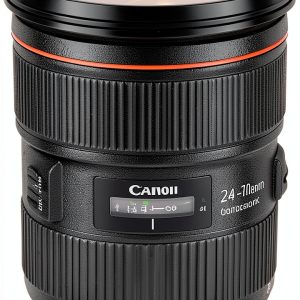 Canon EF 24-70mm f/2.8L II USM DSLR Zoom Lens
 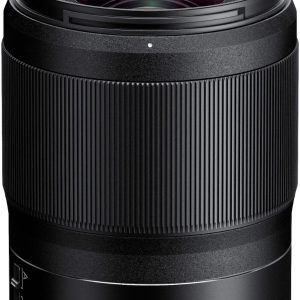 Nikon NIKKOR Z 35mm f/1.8 S Prime Lens for Z Cameras
 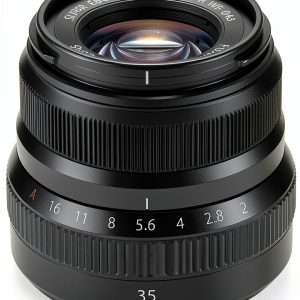 Fujifilm XF 35mm f2 R WR Lens Weather Resistant Prime
 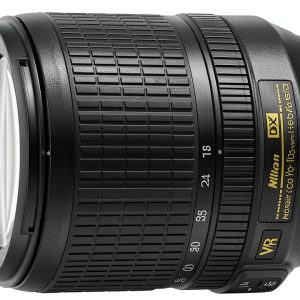 Nikon AF S DX NIKKOR 18 105mm f3.5 5.6G ED VR Zoom Lens
  Canon EF 50mm f18 STM Lens Bundle with Filter Kit
 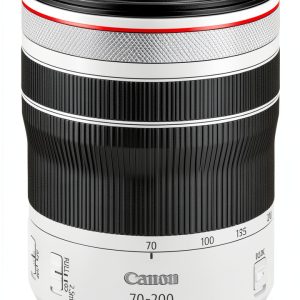 Canon RF70 200mm F4 L IS USM Telephoto Zoom Lens EOS R
  LG UltraWide 34 Curved Monitor WQHD HDR 100Hz
  Dell Desktop Intel Core Ultra 5 16GB Memory 1TB Storage
  HyperGear Flexi Pro USB-C Cable Super Soft Fast Charging
 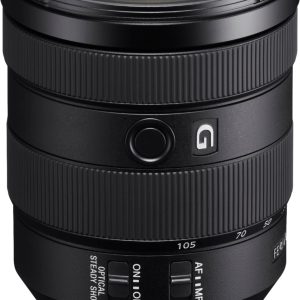 Sony G 24-105mm f/4 OSS Zoom Lens E-mount Cameras
 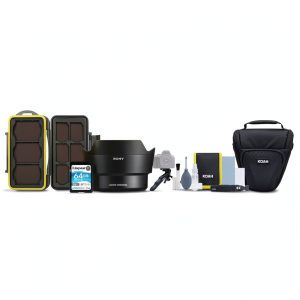 Sony 16mm Fisheye Conversion Lens for 28mm f2 Bundle
  Overtime MFI Lightning Cable Durable Fast Charging Apple
  OtterBox Defender Case Rugged Protection iPhone 15 14 13
  Dell Pro Max Tower Desktop Intel Core AMD Radeon Pro W7500
 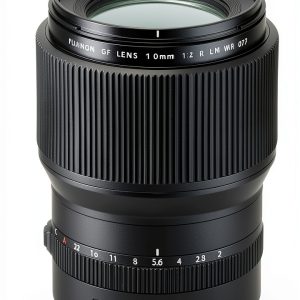 Fujinon GF 110mm F2 R LM WR Standard Zoom Lens G Mount
  Satechi Smart Outlet EU Control Appliances Remotely
  Canon RF100 500mm Telephoto Zoom Lens EOS R Cameras
  BOOST↑CHARGE Wireless Charging Pad 15W Universal Easy Align
  Panasonic Lumix 45 150mm Zoom Lens ASPH OIS Photography
  Satechi USB-C Multimedia Adapter M1 Dual 4K HDMI Ports