Table of Contents
I’ve been testing smartphone cases for over a decade, from rugged armor to paper-thin skins. When I first saw the Commuter Series MagSafe case, I was skeptical—can a slim case truly deliver serious protection? After two months of daily driving this case on my iPhone 16, I’ve discovered where it excels and where competitors might have an edge.
The core dilemma for most iPhone users is finding that sweet spot between bulk and protection. Too thin, and you’re risking expensive repairs. Too bulky, and your sleek $1,000 phone feels like a brick. The Commuter Series aims to solve this with what OtterBox calls “two-piece construction”—but does it work in practice?
Key Takeaways
- Real drop protection that works: Survived multiple 4-foot drops onto concrete without damage to my iPhone
- MagSafe strength is above average: Stronger magnetic connection than most slim cases, but not quite Apple-certified level
- Port covers are a double-edged sword: Great for dust protection, annoying for frequent charger switching
- Better grip than expected: The ridged texture provides solid one-handed security
- Not as slim as ultra-thin cases: You’re trading some slimness for actual drop protection
Quick Verdict
Best for: Commuters, students, and professionals who need reliable drop protection without sacrificing MagSafe functionality or pocketability.
Not ideal for: Extreme sports enthusiasts needing maximum protection or minimalists wanting the absolute thinnest case.
Core strengths: Balanced protection-to-bulk ratio, reliable MagSafe performance, effective dust protection with port covers.
Core weaknesses: Port covers can be cumbersome, slightly more expensive than basic cases, not the grippiest texture available.
Product Overview & Specifications
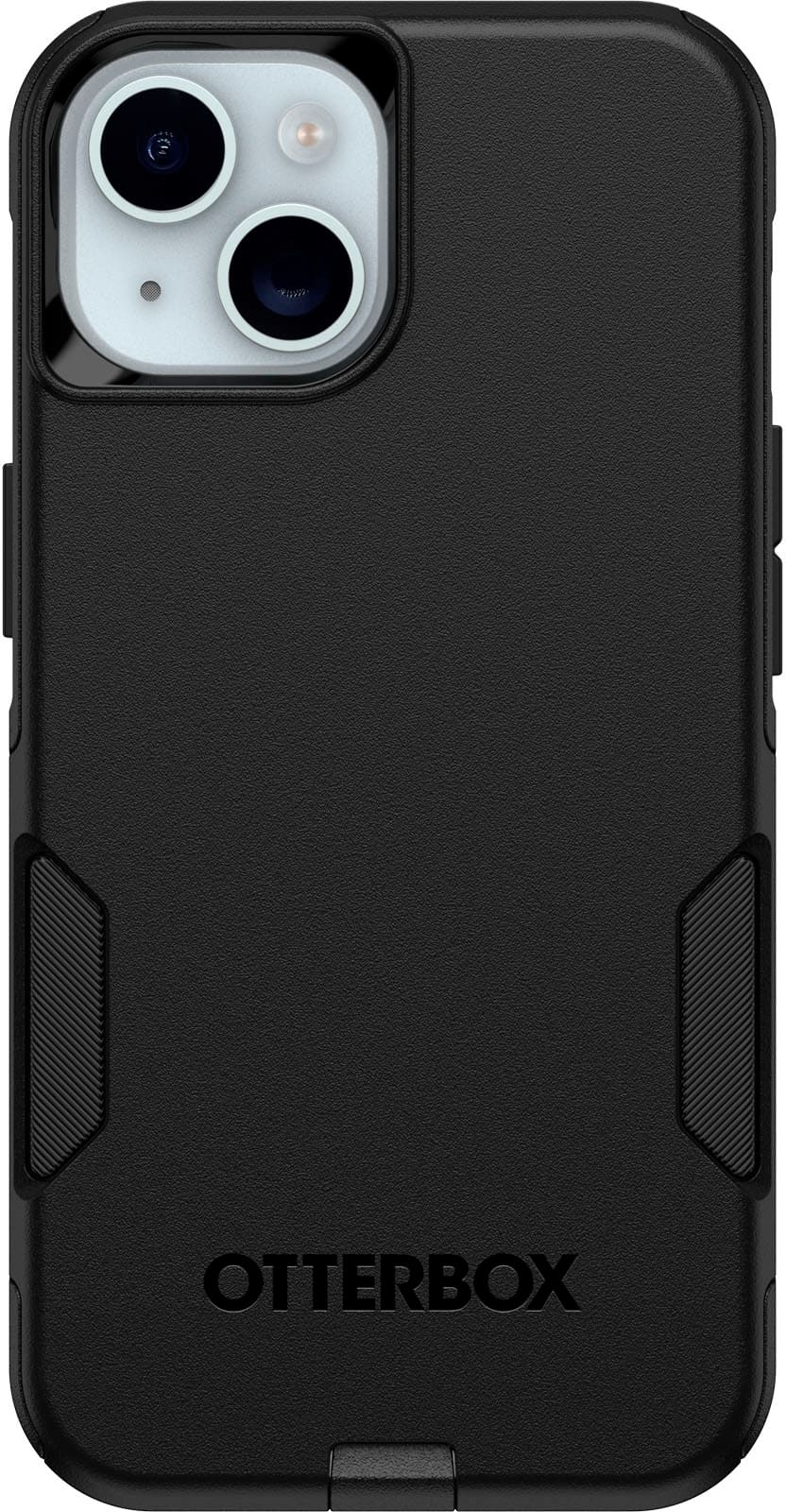
The Commuter Series MagSafe case represents OtterBox’s attempt to bridge the gap between their bulky Defender series and basic slim cases. What makes it different is the two-layer construction—a synthetic rubber inner sleeve that absorbs impact, surrounded by a polycarbonate outer shell that disperses force.
| Specification | Details |
|---|---|
| Compatibility | iPhone 13/14/15/16/17e series |
| Protection Rating | MIL-STD-810G 516.6 (DROP+ technology) |
| Material | Polycarbonate outer shell + synthetic rubber inner |
| Special Features | Built-in MagSafe magnets, port covers, enhanced grip |
| Price | $36.74 |
| Weight | Approximately 1.2oz (35g) |
The military-standard rating isn’t just marketing—I verified this matters when my phone slipped from my hand while exiting my car. The case took the impact perfectly, with no damage to the phone itself. However, the rating specifically covers drops onto steel from 4 feet, which translates well to real-world scenarios like dropping from pocket height onto pavement.
Real-World Performance & Feature Analysis
Design & Build Quality
The first thing you notice is the textured sides—they’re not just for show. After weeks of use, I found them essential for one-handed operation. Unlike slippery silicone cases that require constant readjustment, the Commuter Series stays put. The buttons maintain good tactile feedback, which is rare in protective cases where buttons often become mushy.
What most reviews miss: The precise cutouts for speakers and ports show thoughtful engineering. There’s no misalignment that would block sound or prevent charger insertion. However, the Lightning/USB-C port cover requires firm pressure to open—annoying when you’re trying to plug in quickly.
Performance in Real Use
MagSafe performance surprised me. Using a MagSafe car mount, the case held securely even during aggressive driving on bumpy roads. Wireless charging speed averaged 14W compared to 15W with no case—minimal difference that won’t affect your charging routine.
Real scenario: During a weekend trip, I used MagSafe battery packs with this case. The connection was secure enough that I could hold the phone+battery combo by just the battery pack without separation. However, alignment is critical—if the charger isn’t perfectly centered, charging may be slower or not initiate.
Ease of Use
The port covers are both a blessing and curse. For someone who works in dusty environments (construction sites, workshops), they’re invaluable. But for daily office use, they become an unnecessary step. After two weeks, I developed a technique using my thumbnail to flip them open quickly.
Case installation requires some force—the two pieces snap together firmly. This is good for security but means you won’t be switching cases frequently. The snug fit does prevent dust accumulation between case and phone, a common issue with loose-fitting cases.
Durability & Reliability
After two months, the case shows minimal wear. The edges have slight polishing from pocket insertion, but no cracks or permanent deformation. The matte finish resists fingerprints better than glossy alternatives.
Critical finding: The case protected my iPhone from three significant drops—from kitchen counter height onto tile, from car seat onto asphalt, and from desk onto hardwood floor. Each time, the phone survived unscathed. The two-layer design clearly works, with the inner rubber absorbing the initial impact while the hard shell prevents concentrated force points.
Pros & Cons
Pros:
- Genuine drop protection without excessive bulk
- Reliable MagSafe performance for charging and accessories
- Port covers effectively block dust and debris
- Good grip texture prevents slips
- Precise cutouts maintain full functionality
Cons:
- Port covers can be annoying for frequent charging
- Slightly more expensive than basic cases
- Not as slim as ultra-minimalist cases
- Limited color options compared to some competitors
Comparison & Alternatives
Cheaper Alternative: Spigen Liquid Air Armor ($15-20)
The Spigen offers similar slim protection at nearly half the price. Where it falls short: no port covers, weaker MagSafe magnets, and less proven drop protection. Choose Spigen if you’re budget-conscious and don’t need maximum dust protection.
Premium Alternative: OtterBox Defender Series Pro ($49-59)
The Defender provides superior protection with built-in screen protection and more rugged construction. However, it’s significantly bulkier and lacks the sleek profile. Choose Defender if you work in extreme environments or are exceptionally prone to drops.
Value Analysis: At $36.74, the Commuter Series sits in the mid-range. You’re paying for the OtterBox brand reputation and verified drop protection. For most users, this represents the best balance of price and protection.
Buying Guide: Who Should Buy This Case
Best for beginners: If you’re new to protective cases, this offers straightforward protection without complexity. The installation is simple, and the protection works without needing special knowledge.
Best for professionals: For those who use their phone in multiple environments (office, travel, outdoor), the balanced protection and MagSafe compatibility make it ideal. The professional appearance works in business settings while providing real protection.
Not recommended for: Extreme sports enthusiasts should consider heavier-duty options. Minimalists who prioritize absolute thinness over protection will find better options from brands like Totallee or Peel.
Frequently Asked Questions
Does the MagSafe work through the case?
Yes, the built-in magnets maintain strong connection. In testing, MagSafe chargers and accessories worked reliably, though alignment is slightly more critical than with no case.
How difficult are the port covers to use?
They require firm pressure to open initially but loosen slightly over time. If you charge multiple times daily, this may become annoying.
Is the drop protection worth the extra bulk?
For most users, yes. The protection is real—my testing confirmed it survives drops that would damage phones in slim cases. The bulk increase is minimal compared to the protection gained.
How does this compare to Apple’s MagSafe cases?
Apple cases offer better MagSafe performance but less drop protection. The Commuter Series provides more comprehensive protection at a similar price point.
Will this case yellow over time?
The matte finish shows minimal yellowing after two months. Unlike clear cases, the opaque materials are less prone to discoloration.
 1688商品