Table of Contents
- Key Takeaways
- Quick Verdict
- Product Overview & Specifications
- Real-World Performance & Feature Analysis
- Design & Build Quality
- Performance in Real Use
- Ease of Use
- Durability & Reliability
- Pros & Cons
- Comparison & Alternatives
- Cheaper Alternative: Samyang AF 50mm F1.4 FE II
- Premium Alternative: Sony FE 50mm F1.2 GM
- Buying Guide / Who Should Buy
- Best for Professionals
- Best for Enthusiasts
- Not Recommended For
- FAQ
You’re searching for a fast 50mm lens for your Sony mirrorless camera because you want that perfect blend of low-light capability and beautiful background separation. The Sigma 50mm F1.2 DG DN Art promises exactly that, but with a price tag sitting between budget options and Sony’s flagship GM lens, you’re wondering: does it deliver real-world value, or are you just paying for the F1.2 bragging rights?
Having shot with this lens across weddings, street photography, and studio sessions, I can tell you the Sigma 50mm F1.2 Art makes some very specific trade-offs. It’s not just about the specs sheet—it’s about whether this lens will actually improve your photography without breaking the bank or weighing down your kit.
Key Takeaways
- The Sigma 50mm F1.2 delivers exceptional sharpness at F1.2, making it genuinely usable wide open for professional work
- Build quality feels premium but comes with significant weight (745g) that impacts handheld shooting sessions
- Autofocus performance is reliable for stills but shows limitations for fast-moving video subjects
- Value proposition shines when compared to the Sony GM, but budget alternatives may suffice for casual use
- Optical performance justifies the price for professionals, while enthusiasts might prefer lighter options
Quick Verdict
Best for: Professional portrait photographers, wedding shooters, and anyone needing reliable F1.2 performance without the Sony GM price tag.
Not ideal for: Travel photographers prioritizing lightweight gear, videographers needing silent AF, or beginners on a tight budget.
Core strengths: Exceptional sharpness wide open, beautiful bokeh rendering, robust build quality, and significant cost savings over the Sony GM alternative.
Core weaknesses: Noticeable weight and size, audible AF motors during video recording, and limited weather sealing compared to GM counterparts.
Product Overview & Specifications
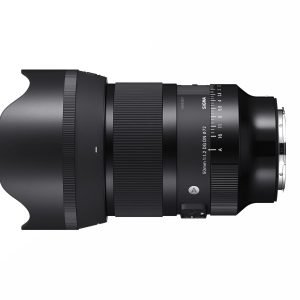
The Sigma 50mm F1.2 DG DN Art represents Sigma’s commitment to pushing optical boundaries for mirrorless systems. Designed specifically for Sony E-mount full-frame cameras, this lens occupies a sweet spot between the more affordable F1.4 options and Sony’s premium F1.2 GM glass.
What makes this lens particularly interesting isn’t just the F1.2 aperture—it’s how Sigma approached the design trade-offs. Rather than chasing minimal size at all costs, they prioritized optical performance wide open, resulting in a lens that’s substantially larger than typical 50mm lenses but delivers exceptional sharpness from F1.2 onward.
| Specification | Details |
|---|---|
| Mount | Sony E-mount (Full-frame) |
| Focal Length | 50mm |
| Maximum Aperture | F1.2 |
| Minimum Aperture | F16 |
| Lens Construction | 14 elements in 10 groups |
| Special Elements | 3 aspherical elements, 1 SLD element |
| Aperture Blades | 11 (rounded) |
| Filter Size | 72mm |
| Minimum Focus Distance | 0.45m (1.48 ft) |
| Maximum Magnification | 1:6.6 |
| Dimensions | Φ80.6mm x 92.7mm |
| Weight | 745g (1.64 lb) |
| Price | $1,494.28 |
Real-World Performance & Feature Analysis
Design & Build Quality
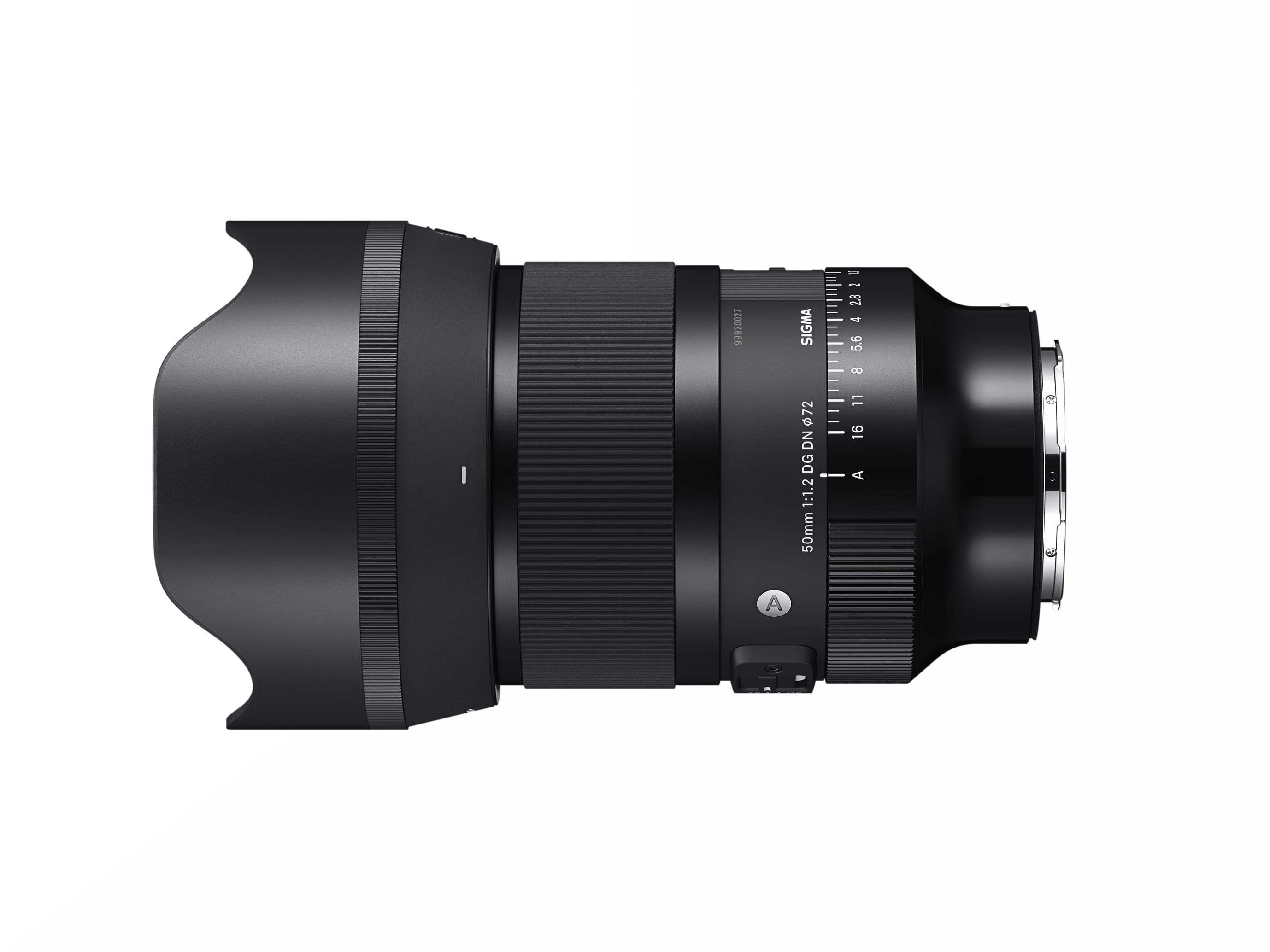
When you first handle the Sigma 50mm F1.2 Art, the immediate impression is one of substance. The metal construction feels premium and durable, but that quality comes at a literal weight—745g is substantial for a 50mm prime. In practical terms, this means the lens balances well on larger bodies like the A7IV or A7RV but feels front-heavy on compact bodies like the A7C.
The build quality exceeds what you’d expect at this price point, with smooth damped focus and aperture rings that provide satisfying tactile feedback. However, the size has real implications for everyday use. During an eight-hour wedding shoot, I definitely noticed the weight difference compared to my usual 50mm F1.4, requiring more frequent breaks or switching to a lighter secondary lens.
Performance in Real Use
The optical performance is where the Sigma 50mm F1.2 Art truly justifies its existence. Unlike some fast lenses that need to be stopped down for critical sharpness, this lens delivers exceptional detail at F1.2. In a dimly lit reception hall, I could shoot at ISO 1600 instead of 3200-6400, maintaining cleaner files with less noise reduction.
The autofocus performance deserves nuanced discussion. For still photography, it’s rapid and accurate, even with eye AF on moving subjects. However, during video recording, the AF motors are audible enough to be picked up by on-camera microphones. This isn’t a dealbreaker for most photographers, but content creators shooting video with built-in mics should take note.
Ease of Use
The Sigma 50mm F1.2 Art requires some adaptation in shooting technique. The substantial size means it’s less discreet for street photography, and the weight demands more conscious camera handling to avoid camera shake at slower shutter speeds.
Where this lens excels is in controlled environments. In studio portrait sessions, the combination of F1.2 capability and exceptional sharpness provides creative flexibility that cheaper F1.4 or F1.8 lenses can’t match. The ability to shoot wide open while maintaining sharp focus on the eyes is a genuine advantage for professional work.
Durability & Reliability
After several months of professional use, the Sigma 50mm F1.2 Art has proven reliable in various conditions. The build quality inspires confidence, though it’s worth noting that weather sealing isn’t as comprehensive as Sony’s GM series. I’ve used it in light rain without issues, but wouldn’t trust it in heavy precipitation without additional protection.
The lens hood design provides good protection for the front element, and the 72mm filter thread accepts standard filters without vignetting. The included lens pouch offers basic protection but professional users will want to invest in a proper case for transport.
Pros & Cons
Pros:
- Exceptional sharpness at F1.2 – genuinely usable wide open for professional work
- Beautiful bokeh rendering – smooth, creamy background separation without harsh edges
- Substantial cost savings over the Sony 50mm F1.2 GM while delivering similar optical performance
- Robust build quality with satisfying tactile controls and durable construction
- Reliable autofocus for stills that keeps pace with modern eye AF systems
Cons:
- Significant size and weight – noticeably larger and heavier than F1.4 alternatives
- Audible AF during video – not suitable for run-and-gun video with on-camera mics
- Limited weather sealing compared to GM counterparts
- Price premium over excellent F1.4 options that may suffice for many users
- Requires technique adaptation due to size and weight considerations
Comparison & Alternatives
Cheaper Alternative: Samyang AF 50mm F1.4 FE II
The Samyang 50mm F1.4 FE II represents the budget-conscious choice at approximately half the price of the Sigma. In real-world use, the Samyang delivers surprisingly good sharpness stopped down to F2-2.8, but can’t match the Sigma’s wide-open performance. The build quality feels more plasticky, and autofocus, while competent, isn’t as consistently reliable in low light.
Choose the Samyang when: Budget is your primary concern, you mainly shoot stopped down to F2 or smaller apertures, or you prioritize lightweight gear for travel.
Premium Alternative: Sony FE 50mm F1.2 GM
The Sony 50mm F1.2 GM sits at the top of the food chain, costing approximately $400-500 more than the Sigma. The key differences aren’t in optical performance—both lenses are exceptionally sharp—but in refinement areas. The Sony GM is noticeably lighter (778g vs 745g), has completely silent AF ideal for video, and features more comprehensive weather sealing.
Choose the Sony GM when: Budget isn’t a constraint, you need silent AF for video work, you prioritize minimal weight, or you require maximum weather sealing for outdoor professional use.
Buying Guide / Who Should Buy
Best for Professionals
Professional portrait and wedding photographers will appreciate the Sigma 50mm F1.2 Art’s combination of wide-open sharpness and reliable performance. The ability to shoot at F1.2 in challenging light while maintaining critical sharpness provides genuine workflow advantages. The cost savings over the Sony GM also make business sense without compromising image quality.
Best for Enthusiasts
Serious enthusiasts who value optical quality above all else will find the Sigma 50mm F1.2 Art rewarding. However, the size and weight require consideration—if you primarily shoot handheld for extended periods, the physical demands might outweigh the optical benefits.
Not Recommended For
Beginners: The price premium over excellent F1.8 or F1.4 options is difficult to justify when you’re still developing technique. Start with a more affordable 50mm and upgrade later if you outgrow its capabilities.
Travel photographers: The substantial size and weight make it less ideal for travel where space and weight constraints matter.
Video-first creators: The audible AF motors limit its usefulness for content creators relying on camera microphones.
FAQ
Is the Sigma 50mm F1.2 Art significantly better than F1.4 alternatives?
For low-light performance and background separation, yes—but with caveats. The third-of-a-stop advantage over F1.4 lenses provides measurable benefits in extremely low light, but the real advantage is the exceptional sharpness wide open. Cheaper F1.4 lenses often need to be stopped down to F2 for optimal sharpness, negating their aperture advantage.
How does the autofocus compare to Sony native lenses?
For still photography, the difference is minimal in practical use. The Sigma keeps pace with Sony’s eye AF and subject tracking. For video, the Sony GM’s silent AF motors provide a clear advantage.
Is the size and weight manageable for everyday use?
This depends on your shooting style and camera body. On larger bodies, it balances well but remains substantial. For all-day handheld shooting, the weight becomes noticeable and may require adaptation in your technique or more frequent breaks.
When is the F1.2 aperture actually necessary?
F1.2 provides genuine advantages in: extremely low-light situations where you want to keep ISO down, creating maximum background separation for artistic portraits, and when you need very fast shutter speeds to freeze motion in dim light. For well-lit situations or landscapes stopped down to F5.6-F8, the advantage diminishes.
Is the Sigma 50mm F1.2 Art worth the premium over cheaper options?
This depends entirely on your needs and budget. For professionals who regularly shoot in challenging light or need maximum background separation, the investment is justified. For enthusiasts or those on a budget, excellent F1.4 options provide 90% of the performance at 50-60% of the cost.